Menu
Currency
mtDNA Haplogroup • Maternal Lineage

M65

mtDNA Haplogroup M65

~12,000 years ago
South Asia / Southeast Asia
1 subclades
Scroll to explore
Chapter I

The Story

The journey of mtDNA haplogroup M65

Origins and Evolution

mtDNA haplogroup M65 sits as a subclade of the M4"67A cluster (a branch of macro-haplogroup M), placing it within the broad maternal radiation that spread across South and Southeast Asia after the initial out-of-Africa dispersals. Based on its phylogenetic position under M4"67A and patterns seen in related M4-series lineages, M65 most likely arose during the terminal Pleistocene to early Holocene (roughly ~12 kya, with substantial uncertainty) as local populations adapted to post-glacial environments and changing subsistence strategies. Because M4-derived lineages are primarily Asian in distribution, the most parsimonious origin for M65 is the Indian subcontinent or adjacent mainland Southeast Asia.

Subclades (if applicable)

At present M65 is an intermediate clade with limited publicly reported downstream diversity in published datasets; detailed subclade structure is still poorly resolved because of sparse sampling and few complete mitochondrial genomes annotated to this label. Future high-resolution mitogenome sequencing in South and Southeast Asian populations will be needed to define internal branches, estimate coalescence times more precisely, and reveal any geographically structured subclades.

Geographical Distribution

Observed occurrences and reasonable phylogeographic inference place M65 predominantly in South Asia (India, Bangladesh, Sri Lanka) with additional low-to-moderate occurrences reported or expected in mainland Southeast Asia (Myanmar, Thailand, Laos). There are occasional, likely low-frequency reports or matches in neighboring Central or East Asian populations, but these are rare and may reflect recent gene flow or undersampling. Overall, distribution is localized and patchy rather than widespread.

Historical and Cultural Significance

Because M65 is a relatively deep maternal lineage tied to local M4-derived diversity, it most likely reflects pre-Neolithic and early Holocene maternal ancestry in the regions where it occurs. The haplogroup may therefore be associated with indigenous hunter-gatherer groups and early local adopters of agriculture in South and Southeast Asia. It is not currently linked to large steppe-related Bronze Age expansions that characterize other parts of Eurasia, but it may have persisted through Neolithic and Bronze Age cultural transitions in South Asia (for example, within communities contributing ancestry to or interacting with the Indus Valley/Harappan cultural sphere).

Conclusion

mtDNA M65 is a modestly diverged member of the M4"67A clade with a likely origin in South or Southeast Asia around the terminal Pleistocene / early Holocene. Its present-day detection is limited and geographically focused; improved mitogenome sampling and publication from understudied South and Southeast Asian populations are required to refine its age, substructure, and detailed prehistoric associations. Until then, descriptions remain provisional and should be updated as new sequence data become available.

Key Points

  • Origins and Evolution
  • Subclades (if applicable)
  • Geographical Distribution
  • Historical and Cultural Significance
  • Conclusion
Chapter II

Tree & Relationships

Phylogenetic context and subclades

Evolution Path

This haplogroup's evolutionary journey from its earliest ancestor to the present.

Steps Haplogroup Age Estimate Archaeology Era Time Passed Immediate Descendants Tested Modern Descendants Ancient Connections
1 M65 Current ~12,000 years ago 🌾 Neolithic 12,000 years 1 15 0
2 M4"67A — — — 2 30 0
3 M4"67 — — — 8 111 0
4 M ~60,000 years ago 🦴 Paleolithic 60,000 years 42 2,162 41
5 L3 ~70,000 years ago 🦴 Paleolithic 70,000 years 7 23,542 6
6 L3'4 — — — 2 23,581 0
7 L3'4'6 — — — 2 23,584 0
8 L2'3'4'6 — — — 2 24,475 0
9 L2'3'4'5'6'7 — — — 2 24,488 0
10 L1'2'3'4'5'6'7 — — — 2 24,903 0
11 L ~160,000 years ago 🦴 Paleolithic 160,000 years 2 25,205 5

Siblings (1)

Other branches from the same parent haplogroup

Chapter III

Where in the World

Geographic distribution and modern presence

Place of Origin

South Asia / Southeast Asia

Modern Distribution

The populations where mtDNA haplogroup M65 is found include:

  1. South Asian populations (India — particularly some tribal and eastern groups)
  2. Southeast Asian populations (Myanmar, Thailand, Laos — low to moderate frequency)
  3. Neighboring Central/East Asian groups (sporadic, low frequency occurrences)
CHAPTER IV

When in Time

Your haplogroup in the context of human history

~12k years ago

Haplogroup M65

Your mtDNA haplogroup emerged in South Asia / Southeast Asia

South Asia / Southeast Asia
~10k years ago

Neolithic Revolution

Agriculture begins, settled communities form

~5k years ago

Bronze Age

Metalworking, writing, and early civilizations

~3k years ago

Iron Age

Iron tools, expanded trade networks

~2k years ago

Classical Antiquity

Greek and Roman civilizations flourish

Present

Present Day

Modern era

Your Haplogroup
Historical Era
Chapter IV-B

Linked Cultures

Ancient cultures associated with mtDNA haplogroup M65

Cultural Heritage

These ancient cultures have been linked to haplogroup M65 based on matching ancient DNA samples from archaeological excavations. The presence of this haplogroup in these cultures provides insights into the migrations and population movements of populations carrying this haplogroup.

Aligrama Culture Barikot Culture British Neolithic Goyet Cave Gravettian Loebanr Culture Ostuni Culture Spanish Gravettian Swat Valley Transition Udegram Culture
Culture assignments are based on archaeological context of ancient DNA samples and may represent regional associations during specific time periods.
Chapter V

Sample Catalog

8 subclade carriers of haplogroup M65 (no exact M65 samples sequenced yet)

8 / 8 samples
Portrait Sample Country Era Date Culture mtDNA Match
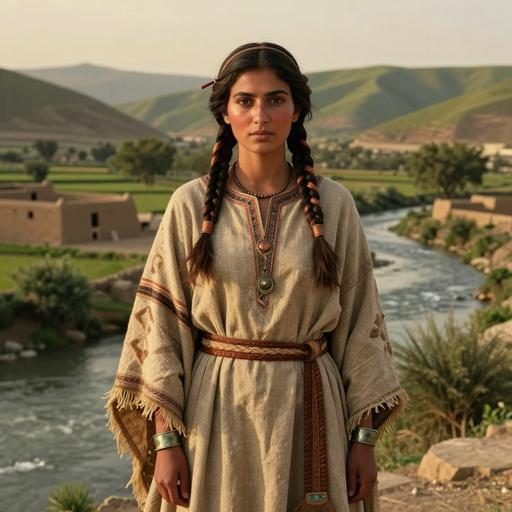
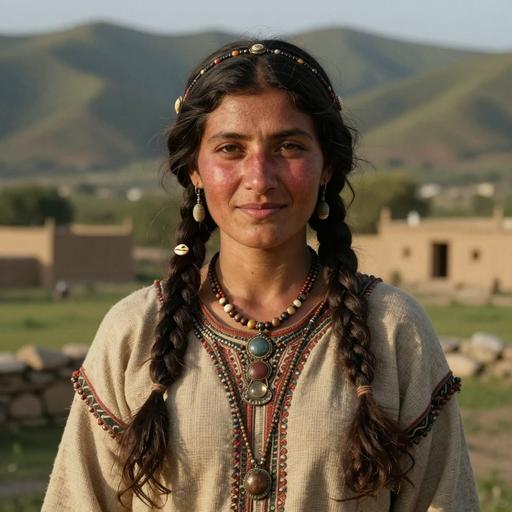
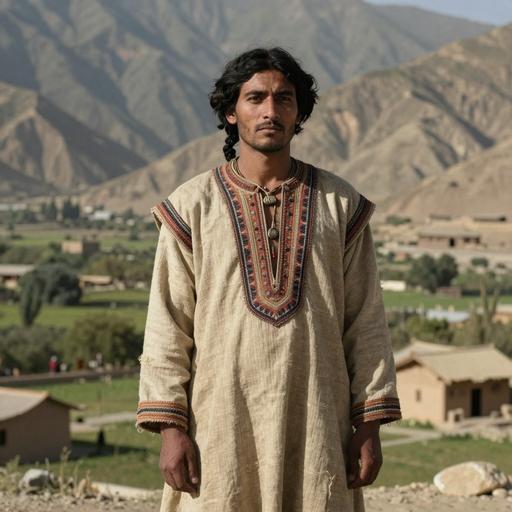
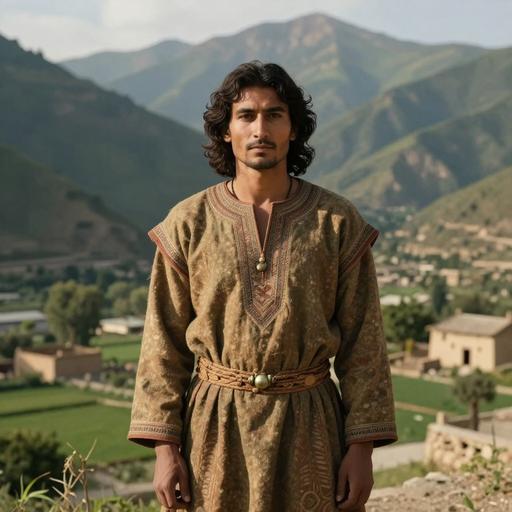
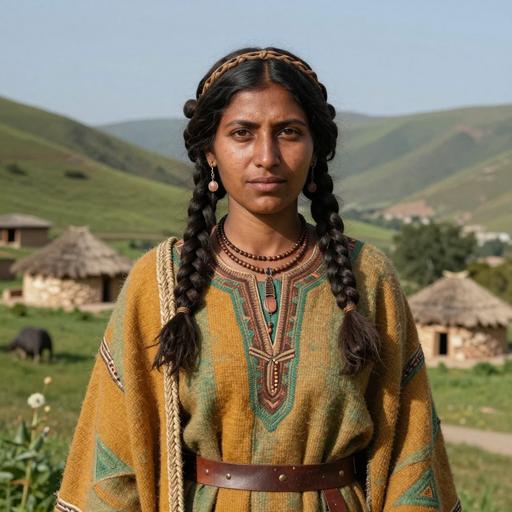
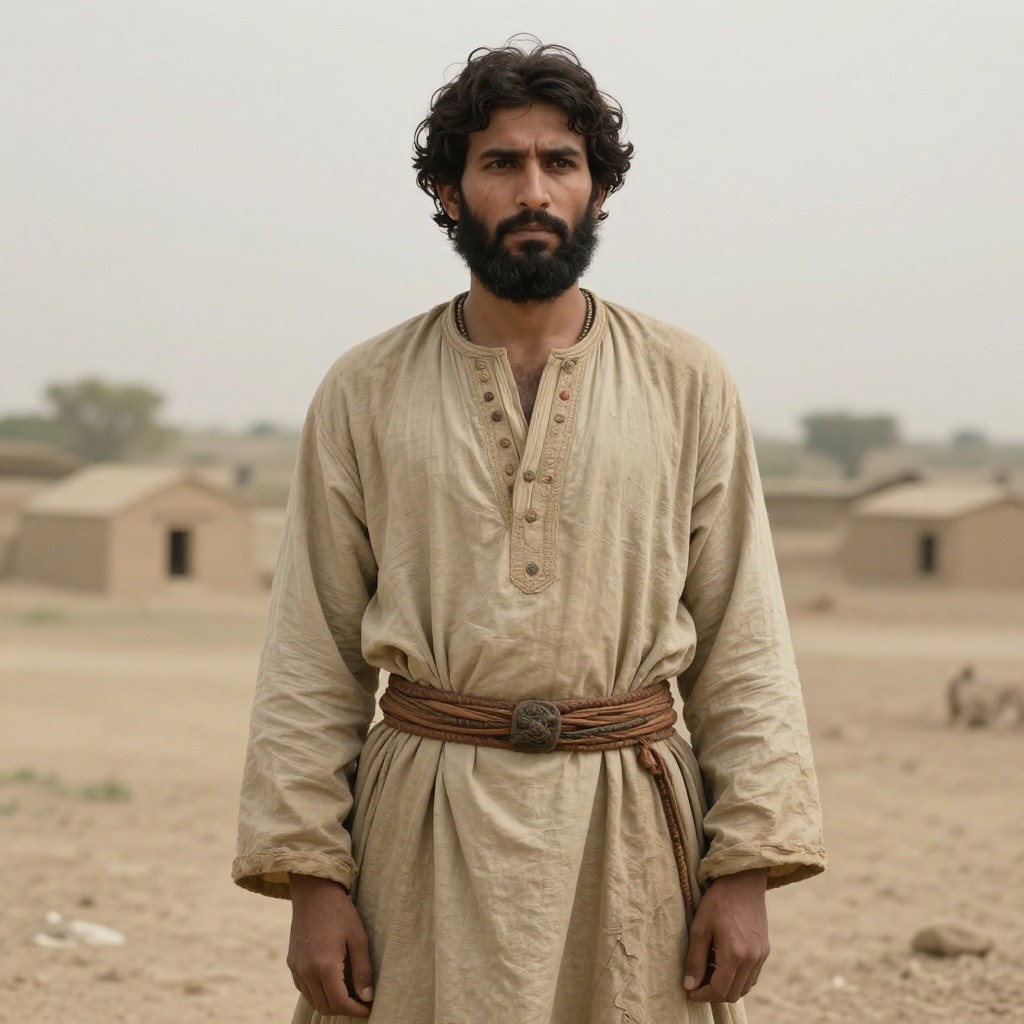
Portrait of ancient individual I6546 from Pakistan, dated 978 BCE - 831 BCE
I6546
Pakistan Barikot Iron Age Settlement in Swat Valley, Pakistan 978 BCE - 831 BCE Barikot Culture M65a-a Downstream
Portrait of ancient individual I8219 from Pakistan, dated 978 BCE - 831 BCE
I8219
Pakistan Iron Age Aligrama 978 BCE - 831 BCE Aligrama Culture M65a-a Downstream
Portrait of ancient individual I8219 from Pakistan, dated 978 BCE - 831 BCE
I8219
Pakistan Iron Age Swat Valley 978 BCE - 831 BCE M65a-a Downstream
Portrait of ancient individual I12459 from Pakistan, dated 1000 BCE - 800 BCE
I12459
Pakistan The Loebanr Iron Age Culture of Pakistan 1000 BCE - 800 BCE Loebanr Culture M65a1 Downstream
Portrait of ancient individual I12472 from Pakistan, dated 1000 BCE - 800 BCE
I12472
Pakistan Transition from Middle to Late Iron Age in Swat Valley, Pakistan 1000 BCE - 800 BCE Swat Valley Transition M65a-a Downstream
Portrait of ancient individual I12983 from Pakistan, dated 1000 BCE - 800 BCE
I12983
Pakistan The Loebanr Iron Age Culture of Pakistan 1000 BCE - 800 BCE Loebanr Culture M65a-a Downstream
Portrait of ancient individual I12983 from Pakistan, dated 1000 BCE - 800 BCE
I12983
Pakistan The SPGT Culture 1000 BCE - 800 BCE M65a-a Downstream
Portrait of ancient individual I6197 from Pakistan, dated 1200 BCE - 800 BCE
I6197
Pakistan Udegram Iron Age Fortified Settlement in Swat Valley, Pakistan 1200 BCE - 800 BCE Udegram Culture M65a Downstream
Chapter VI

Carrier Distribution Map

Geographic distribution of 8 ancient DNA samples (direct and subclade carriers of M65)

Subclade carrier
Time Period Filter
All Time Periods
Showing all samples
Chapter VII

Temporal Distribution

Distribution of carriers across archaeological periods

Chapter VIII

Geographic Distribution

Distribution by country of origin (direct and subclade carriers shown by default)

Chapter IX

Country × Era Distribution

Cross-tabulation of carrier countries and archaeological periods (direct and subclade carriers shown by default)

Data

Data & Provenance

Source information and data quality

Last Updated 2026-06-14
Confidence Score 50/100
Coverage Low
Data Source

We use the latest phylotree for MTDNA haplogroup classification and data.