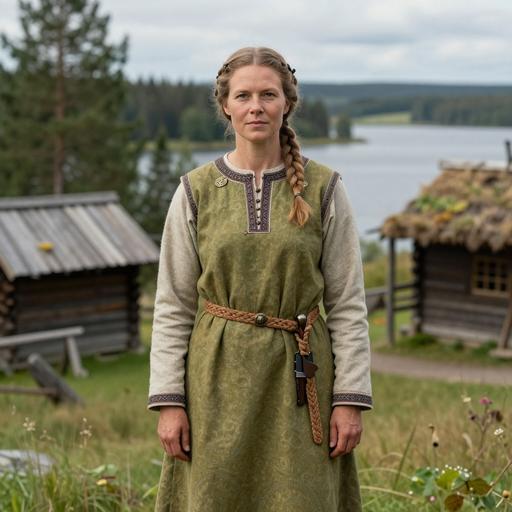
The Story
The journey of mtDNA haplogroup U4A3
Origins and Evolution
mtDNA haplogroup U4A3 is a downstream branch of the U4A lineage, itself part of the wider U4 maternal haplogroup complex that is characteristic of Eurasian hunter‑gatherer populations. The parent haplogroup U4 has deep roots in western and northern Eurasia, appearing in Mesolithic European hunter‑gatherers and later in various Neolithic and Bronze Age contexts; U4A3 represents one of the later diversifications within this regional radiation. Based on phylogenetic position and the distribution of related lineages, U4A3 most likely emerged in northern Eurasia during the late Neolithic to early Bronze Age (a few thousand years after the initial U4 expansion).
Subclades
As an intermediate/derived branch of U4A, U4A3 may contain internal substructure visible only in high‑resolution mitogenome datasets. Current public phylogenies and population studies identify U4A3 as a defined branch, but further sequencing of modern and ancient mitogenomes is needed to reliably resolve any finer subclades and their geographical signatures. In many mtDNA projects U4A3 is treated as a terminal or near‑terminal branch pending fuller sample coverage.
Geographical Distribution
U4A3 shows a northern Eurasian distribution with highest representation in northeastern Europe and pockets in northwestern Siberia. Modern carriers are most frequently reported among populations of the Baltic, Fennoscandia, and some Uralic‑speaking groups in European Russia. Ancient DNA studies have recovered U4 lineages (including U4A branches) from Mesolithic and later contexts across Scandinavia, the eastern Baltic, and parts of the Russian plain, consistent with continuity and local diversification in these regions.
Historical and Cultural Significance
U4A3 and related U4 lineages are often interpreted in the context of Mesolithic hunter‑gatherer ancestry in northern Europe and later demographic processes that affected the region (for example, Neolithic cultural shifts and Bronze Age movements). The presence of U4A‑type lineages in later archaeological contexts and in modern Finno‑Ugric populations suggests they contributed maternal ancestry to groups involved in the post‑glacial recolonization of northern landscapes and in subsequent cultural expansions. While not diagnostic of a single archaeological culture, U4A3 is consistent with maternal continuity in regions associated with Comb Ceramic / hunter‑gatherer traditions and later contacts with Corded Ware and steppe‑derived groups.
Conclusion
U4A3 is a northern Eurasian mtDNA lineage that refines the story of the broader U4 expansion: it likely formed after the main U4 diversification and today marks part of the genetic legacy of Mesolithic–Neolithic populations of northeastern Europe and adjacent Siberia. Continued mitogenome sequencing of both modern and ancient samples will clarify its internal structure, precise chronology, and fine‑scale geographic patterns.
Key Points
- Origins and Evolution
- Subclades
- Geographical Distribution
- Historical and Cultural Significance
- Conclusion