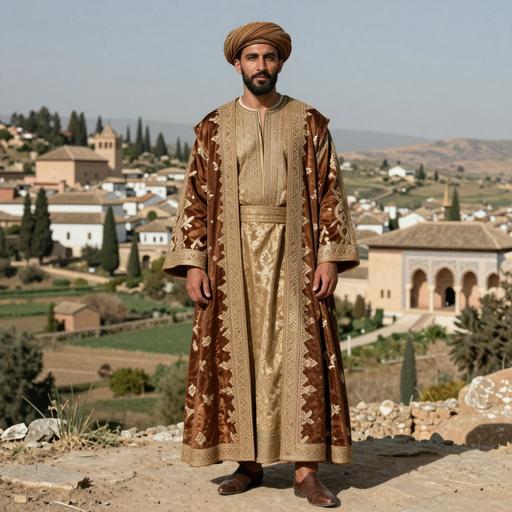
The Story
The journey of mtDNA haplogroup U6A2
Origins and Evolution
mtDNA haplogroup U6A2 is a subclade nested within the broader U6 maternal lineage, which itself is primarily associated with North Africa and adjacent Mediterranean regions. U6 coalesces in the Upper Palaeolithic or Late Pleistocene with subsequent diversification and local expansions into the Holocene. Based on its phylogenetic position as a derived branch of U6 (via the intermediate U6AA1 lineage), U6A2 most likely represents a post‑glacial / early Holocene diversification event centered in the Maghreb (Northwest Africa), estimated here at roughly ~9 kya (thousands of years ago). This estimate is consistent with U6 sublineage radiations that followed climatic amelioration after the Last Glacial Maximum and with archeogenetic patterns showing regional continuity in maternal lineages.
Subclades
U6A2 is an intermediate subclade in the U6 phylogeny. As with many deep mtDNA sublineages, additional downstream branches may be rare or geographically restricted; some named or provisional sub-branches have been reported in targeted population screens but remain to be fully resolved by larger sequencing efforts. The immediate parent (U6AA1) functions as a useful phylogenetic marker connecting U6A2 to both older U6 diversity and any younger internal branches yet to be characterized.
Geographical Distribution
The highest frequencies and diversity of U6 lineages occur in Northwest Africa (Maghreb), and U6A2 follows that pattern. Reported occurrences of U6A2 (and closely related U6a sublineages) are concentrated among:
- Berber-speaking populations of Morocco, Algeria and to a lesser extent Tunisia.
- Some Saharan and Sahelian groups where North African and sub-Saharan maternal gene flow intersect (low frequency).
- Low-frequency occurrences in the Iberian Peninsula and the Canary Islands, reflecting prehistoric and historic Mediterranean connections (migration, trade, and founder effects).
Ancient DNA studies of North Africa show continuity of U6 lineages from the Late Pleistocene and Holocene, supporting an autochthonous North African presence for many U6 subclades. However, the precise prehistoric movements associated specifically with U6A2 require more ancient and high-resolution mitogenomes to be confidently reconstructed.
Historical and Cultural Significance
Because U6 and its subclades are concentrated in the Maghreb, U6A2 is often discussed in the context of Berber maternal heritage and North African demographic history. U6 lineages have been invoked to explain Neolithic and post‑Neolithic population structure in the western Mediterranean, including limited maternal gene flow into Iberia and involvement in later historical movements (Phoenician, Roman, and trans‑Saharan contacts). U6A2's restricted distribution suggests it either arose locally among hunter-gatherer or early farmer communities of Northwest Africa or expanded there during regional cultural horizons (for example, the Mesolithic–Neolithic transition and subsequent Holocene dynamics).
Conclusion
U6A2 is a geographically focused mtDNA subclade of U6 that provides resolution for maternal ancestry in Northwest Africa and adjacent Mediterranean areas. While current population-genetic evidence places its origin in the Maghreb during the early Holocene, additional whole-mitogenome sequencing and ancient DNA sampling from North Africa and Iberia are needed to refine its phylogenetic structure, demographic history, and the timing of any expansions or migrations tied to archaeological cultures.
Key Points
- Origins and Evolution
- Subclades
- Geographical Distribution
- Historical and Cultural Significance
- Conclusion