Menu
Currency
mtDNA Haplogroup • Maternal Lineage

X2M

mtDNA Haplogroup X2M

~9,000 years ago
Near East / Anatolia
1 subclades
6 ancient samples
Scroll to explore
Chapter I

The Story

The journey of mtDNA haplogroup X2M

Origins and Evolution

mtDNA haplogroup X2M sits within the X2 branch of haplogroup X and is identified as an intermediate clade in the Phylotree framework (noted as part of X2M'N family). Based on the phylogenetic position of X2 sublineages and comparative molecular dating, X2M is plausibly derived during the early Holocene (on the order of ~8–12 kya), a period associated with the spread of agriculture from Anatolia and the Near East into surrounding regions. This estimated time depth is tentative and derived by extrapolation from better-characterized X2 subclades; direct coalescent dating for X2M requires more complete sequence sampling.

Genetically, X2 subclades show deeper Paleolithic roots in West Eurasia but several daughter lineages expanded or restructured during the Neolithic and post-Neolithic periods. As an intermediate clade, X2M likely represents one branch that either persisted at low frequency in Near Eastern/Caucasus refugia or participated in early farmer-related dispersals.

Subclades (if applicable)

X2M is itself an intermediate node between its parent grouping (recorded as X2M'N) and downstream descendant branches. At present, the internal substructure of X2M is poorly resolved in public databases: few full mitogenomes assigned to X2M have been published, and named downstream subclades (if present) require confirmation with high-quality complete mtDNA sequences. Future mitogenome sequencing from targeted regions (Anatolia, the Levant, the Caucasus) will be required to define any X2M subclades and to determine whether the lineage diversified locally or contributed to broader dispersals.

Geographical Distribution

Current evidence and reasonable phylogeographic inference place X2M primarily in the Near East and adjacent zones. Likely distributions include Anatolia, the Caucasus, the Levant, and the eastern Mediterranean, with sporadic low-frequency occurrences in southern Europe and North Africa mediated by historic and prehistoric population movements. Because sampling of X2M is limited, reported frequencies are generally low and patchy; the lineage appears to be a minor component of modern maternal pools rather than a regionally dominant haplogroup.

Historical and Cultural Significance

By phylogenetic association, X2M may be linked to population processes associated with the Anatolian/Levantine Neolithic transition—specifically the movement of early farming groups into surrounding regions. If X2M is confirmed in ancient DNA from Neolithic contexts, it would support a role as part of the maternal signature of early farmers or of neighboring hunter-gatherer groups who admixed with farmers. In later periods, low-frequency persistence and sporadic presence could reflect Bronze Age connectivity across the Eastern Mediterranean and Caucasus trade and migration networks.

It is important to emphasize that, unlike well-documented X2 subclades with clearer ancient DNA support, X2M's archaeological associations remain hypothetical until more ancient and modern complete mitogenomes are published and rigorously analyzed.

Conclusion

mtDNA haplogroup X2M is best treated as an understudied, intermediate branch of X2 likely originating in the Near East/Anatolia in the early Holocene and associated—by inference—with Neolithic-era demographic processes. Current knowledge is limited by sparse sampling; resolving its age, internal structure, and precise geographic history will require targeted full mitogenome sequencing in the Near East, Caucasus, and adjacent regions as well as integration of ancient DNA data from archaeological contexts.

Key Points

  • Origins and Evolution
  • Subclades (if applicable)
  • Geographical Distribution
  • Historical and Cultural Significance
  • Conclusion
Chapter II

Tree & Relationships

Phylogenetic context and subclades

Evolution Path

This haplogroup's evolutionary journey from its earliest ancestor to the present.

Steps Haplogroup Age Estimate Archaeology Era Time Passed Immediate Descendants Tested Modern Descendants Ancient Connections
1 X2M Current ~9,000 years ago 🌾 Neolithic 9,000 years 1 1 6
2 X2M'N 2 11 0
3 X2a ~13,000 years ago 🏹 Mesolithic 13,000 years 6 127 4
4 X2 ~22,000 years ago 🏹 Mesolithic 22,000 years 5 152 48
5 X1'2'3 3 170 0
6 X ~10,000 years ago 🌾 Neolithic 10,000 years 3 180 28
7 N ~60,000 years ago 🦴 Paleolithic 60,000 years 16 20,371 13
8 L3 ~70,000 years ago 🦴 Paleolithic 70,000 years 7 23,542 6
9 L3'4 2 23,581 0
10 L3'4'6 2 23,584 0
11 L2'3'4'6 2 24,475 0
12 L2'3'4'5'6'7 2 24,488 0
13 L1'2'3'4'5'6'7 2 24,903 0
14 L ~160,000 years ago 🦴 Paleolithic 160,000 years 2 25,205 5

Siblings (1)

Other branches from the same parent haplogroup

Chapter III

Where in the World

Geographic distribution and modern presence

Place of Origin

Near East / Anatolia

Modern Distribution

The populations where mtDNA haplogroup X2M is found include:

  1. Near Eastern populations (e.g., Anatolia, central/southern Turkey)
  2. Caucasus populations (e.g., Armenians, Georgians and neighboring groups)
  3. Eastern Mediterranean populations (e.g., Levantine groups, Cyprus)
  4. Southern European populations at low frequency (e.g., Greece, Italy)
  5. North African populations at low frequency (e.g., coastal Maghreb)
CHAPTER IV

When in Time

Your haplogroup in the context of human history

~10k years ago

Neolithic Revolution

Agriculture begins, settled communities form

~9k years ago

Haplogroup X2M

Your mtDNA haplogroup emerged in Near East / Anatolia

Near East / Anatolia
~5k years ago

Bronze Age

Metalworking, writing, and early civilizations

~3k years ago

Iron Age

Iron tools, expanded trade networks

~2k years ago

Classical Antiquity

Greek and Roman civilizations flourish

Present

Present Day

Modern era

Your Haplogroup
Historical Era
Chapter IV-B

Linked Cultures

Ancient cultures associated with mtDNA haplogroup X2M

Cultural Heritage

These ancient cultures have been linked to haplogroup X2M based on matching ancient DNA samples from archaeological excavations. The presence of this haplogroup in these cultures provides insights into the migrations and population movements of populations carrying this haplogroup.

Anatolian Bronze Age Anatolian Neolithic Armenian LBA-EIA Avar Culture Croatian Middle Bronze Age Danish Post-Medieval Early Chalcolithic Anatolia El Argar Hagios Charalambos Culture Jordanian Bronze Varna
Culture assignments are based on archaeological context of ancient DNA samples and may represent regional associations during specific time periods.
Chapter V

Sample Catalog

4 direct carriers and 2 subclade carriers of haplogroup X2M

6 / 6 samples
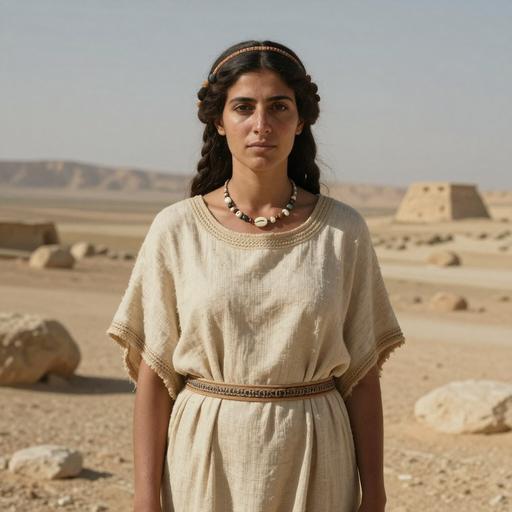
Portrait Sample Country Era Date Culture mtDNA Match
Portrait of ancient individual I5074 from Croatia, dated 1497 BCE - 1397 BCE
I5074
Croatia Middle Bronze Age Croatia 1497 BCE - 1397 BCE Croatian Middle Bronze Age X2m Direct
Portrait of ancient individual I1706 from Jordan, dated 2490 BCE - 2300 BCE
I1706
Jordan Early Bronze Age Jordan 2490 BCE - 2300 BCE Jordanian Bronze X2m Direct
Portrait of ancient individual Bar31 from Turkey, dated 6417 BCE - 6236 BCE
Bar31
Turkey Neolithic Turkey 6417 BCE - 6236 BCE Anatolian Neolithic X2m Direct
Portrait of ancient individual Bar31 from Turkey, dated 6417 BCE - 6236 BCE
Bar31
Turkey Neolithic Anatolia 6417 BCE - 6236 BCE X2m Direct
Portrait of ancient individual I0723 from Turkey, dated 6008 BCE - 5835 BCE
I0723
Turkey Neolithic Turkey 6008 BCE - 5835 BCE Anatolian Neolithic X2m2 Downstream
Portrait of ancient individual I0723 from Turkey, dated 6008 BCE - 5835 BCE
I0723
Turkey Neolithic Anatolia 6008 BCE - 5835 BCE X2m2 Downstream
Chapter VI

Carrier Distribution Map

Geographic distribution of 6 ancient DNA samples (direct and subclade carriers of X2M)

Direct carrier Subclade carrier
Time Period Filter
All Time Periods
Showing all samples
Chapter VII

Temporal Distribution

Distribution of carriers across archaeological periods

Chapter VIII

Geographic Distribution

Distribution by country of origin (direct and subclade carriers shown by default)

Chapter IX

Country × Era Distribution

Cross-tabulation of carrier countries and archaeological periods (direct and subclade carriers shown by default)

Data

Data & Provenance

Source information and data quality

Last Updated 2026-06-14
Confidence Score 50/100
Coverage Low
Data Source

We use the latest phylotree for MTDNA haplogroup classification and data.