Menu
Currency
Y-DNA Haplogroup • Paternal Lineage

E1B1B1B2B2

Y-DNA Haplogroup E1B1B1B2B2

~2,000 years ago
Northwest Africa (Maghreb)
1 subclades
Scroll to explore
Chapter I

The Story

The journey of Y-DNA haplogroup E1B1B1B2B2

Origins and Evolution

E1B1B1B2B2 sits as a downstream branch within the North African E‑M81 (often written in older literature as E1b1b1b or E-M81) complex. Phylogenetically it derives from the Maghreb‑centered E1B1B1B2B lineage, and its estimated time depth (~2 kya) places its origin in the late Bronze/Iron Age to historical periods in Northwest Africa. The haplogroup's pattern is consistent with a relatively recent local expansion and serial founder events rather than an ancient pan‑African dispersal.

Population genetic surveys of E‑M81 and its subclades show that lineages branching near the tip of the M81 tree frequently display high local frequencies in Amazigh (Berber) groups and strong geographic clustering on islands (notably the Canary Islands). These patterns reflect localized drift, social structure, and episodes of demographic expansion in the Maghreb during the last few millennia.

Subclades (if applicable)

E1B1B1B2B2 is best understood as an intermediate/tip clade beneath E1B1B1B2B. Where genotyped at high resolution, researchers identify further micro‑branches that are often population‑specific (for example, lineages enriched among Guanche remains or particular Amazigh tribes). These microclades typically show evidence of founder effects and limited geographic spread, producing high frequency inside source communities and sharp declines outside them.

Because resolution and naming conventions change as more SNPs are discovered, the precise internal branching of E1B1B1B2B2 will be refined with additional high‑coverage Y‑sequencing; current data emphasize island‑specific and Amazigh‑specific subbranches.

Geographical Distribution

The highest frequencies and the greatest haplotype diversity for this subclade are found in Northwest Africa (Morocco, parts of Algeria and Tunisia), consistent with a Maghreb origin. Important distribution features include:

  • Amazigh populations: marked enrichment and frequent local fixation of particular microclades.
  • Canary Islands (Guanche legacy and modern islanders): island founder effects concentrated certain sublineages, so the haplogroup is relatively common there compared with neighboring regions of the Atlantic.
  • Southern Iberia and parts of Sicily: lower but detectable frequencies reflecting prehistoric and historic contact across the western Mediterranean (Neolithic, Phoenician/Punic periods, Roman and later North African influence).
  • Sahel and West Africa: sporadic low‑frequency presence attributed to long‑term trans‑Saharan gene flow and historic interactions.
  • Near East and eastern Mediterranean: small numbers consistent with maritime and trade connections and later historical movements.
  • Diaspora populations: traces in the Americas and Caribbean largely reflect historical migrations and the African/Atlantic diaspora.

Historical and Cultural Significance

The geographic and temporal profile of E1B1B1B2B2 ties it to regional demographic processes in the Maghreb: expansions among Amazigh communities, island colonization events (the Guanche settlement of the Canaries), and recurrent Mediterranean contact. The lineage is often detected in contexts influenced by Punic/Phoenician trade, Roman period movements, and later Arab‑Berber medieval expansions, although its primary signal is local Amazigh ancestry rather than a single sweeping migration event.

In the Canary Islands, ancient DNA from Guanche remains demonstrates that specific E‑M81 sublineages played a substantial role in the paternal ancestry of the pre‑Hispanic islanders; modern islander frequencies retain that imprint. In Iberia and Sicily the haplogroup's presence is usually uneven and concentrated near coastal areas, where historic cross‑Mediterranean gene flow was most intensive.

Conclusion

E1B1B1B2B2 is a late, Maghreb‑centered branch of the broader E‑M81 family that illustrates how relatively recent regional founder events and island colonizations can shape high local frequency of Y‑lineages. Its distribution and diversity make it a useful marker for reconstructing Amazigh population history, island colonization events (Canary Islands/Guanche), and northwestern African contributions to Mediterranean paternal ancestry. Improved SNP resolution and wider sampling will continue to clarify its internal structure and the timing of local expansions.

Key Points

  • Origins and Evolution
  • Subclades (if applicable)
  • Geographical Distribution
  • Historical and Cultural Significance
  • Conclusion
Chapter II

Tree & Relationships

Phylogenetic context and subclades

Evolution Path

This haplogroup's evolutionary journey from its earliest ancestor to the present.

Steps Haplogroup Age Estimate Archaeology Era Time Passed Immediate Descendants Tested Modern Descendants Ancient Connections
1 E1B1B1B2B2 Current ~2,000 years ago 🏛️ Roman Period 2,000 years 1 0 0
2 E1B1B1B2B ~2,000 years ago 🏛️ Roman Period 2,000 years 1 27 8
3 E1B1B1B2 ~3,000 years ago ⚔️ Iron Age 3,000 years 2 206 0
4 E1B1B1B ~4,000 years ago 🔶 Bronze Age 4,500 years 2 495 0
5 E1B1B1 ~22,000 years ago 🏹 Mesolithic 22,000 years 2 1,305 0
6 E1B1B ~26,000 years ago 🦴 Paleolithic 26,000 years 1 1,370 2
7 E1B1 ~28,000 years ago 🦴 Paleolithic 28,000 years 2 1,723 0
8 E1B ~30,000 years ago 🦴 Paleolithic 30,000 years 1 1,734 0
9 E1 ~50,000 years ago 🦴 Paleolithic 50,000 years 2 1,825 2
10 E ~50,000 years ago 🦴 Paleolithic 50,000 years 3 1,968 3
Chapter III

Where in the World

Geographic distribution and modern presence

Place of Origin

Northwest Africa (Maghreb)

Modern Distribution

The populations where Y-DNA haplogroup E1B1B1B2B2 is found include:

  1. Amazigh (Berber) populations of Morocco, Algeria and Tunisia
  2. Canary Islanders (ancient Guanche and modern island populations)
  3. Coastal North African groups (Moroccans, Algerians, Tunisians, some Libyans)
  4. Southern Iberian populations (western Andalusia, Portugal) and parts of Sicily
  5. Sahelian and West African groups at low frequencies (through regional admixture)
  6. Small numbers in Near Eastern and eastern Mediterranean populations (historical gene flow)
  7. African‑descended populations in the Americas and Caribbean (historic/diaspora presence)
  8. Isolated communities showing founder effects (local Amazigh enclaves and island populations)

Regional Presence

North Africa (Maghreb) High
Southern Europe (Iberia & Canary Islands) Moderate
West Africa (Saharan edge) Low
Near East / Eastern Mediterranean Low
North Africa (Maghreb) High
Near East / Eastern Mediterranean Low
Americas (diaspora populations) Low
CHAPTER IV

When in Time

Your haplogroup in the context of human history

~10k years ago

Neolithic Revolution

Agriculture begins, settled communities form

~5k years ago

Bronze Age

Metalworking, writing, and early civilizations

~3k years ago

Iron Age

Iron tools, expanded trade networks

~2k years ago

Classical Antiquity

Greek and Roman civilizations flourish

~2k years ago

Haplogroup E1B1B1B2B2

Your Y-DNA haplogroup emerged in Northwest Africa (Maghreb)

Northwest Africa (Maghreb)
Present

Present Day

Modern era

Your Haplogroup
Historical Era
Chapter IV-B

Linked Cultures

Ancient cultures associated with Y-DNA haplogroup E1B1B1B2B2

Cultural Heritage

These ancient cultures have been linked to haplogroup E1B1B1B2B2 based on matching ancient DNA samples from archaeological excavations. The presence of this haplogroup in these cultures provides insights into the migrations and population movements of populations carrying this haplogroup.

Elmenteitan Culture German Jewish Historic Era 2 Hyrax Hill Iron Age Pastoral Lukenya Hill Culture Molo Cave Culture Pastoral Neolithic Tanzania Multi-Period Tanzanian Prehistoric Xaro Culture
Culture assignments are based on archaeological context of ancient DNA samples and may represent regional associations during specific time periods.
Chapter V

Sample Catalog

2 direct carriers and 5 subclade carriers of haplogroup E1B1B1B2B2

7 / 7 samples
Portrait Sample Country Era Date Culture Y-DNA Match
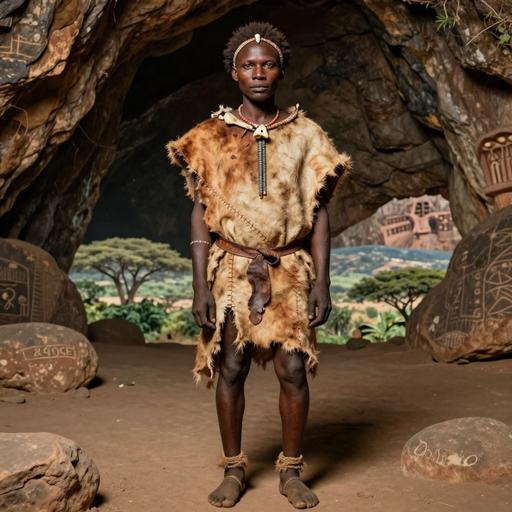
Portrait of ancient individual I13977 from Tanzania, dated 47 BCE - 113 BCE
I13977
Tanzania Prehistoric in Tanzania 47 BCE - 113 BCE Tanzanian Prehistoric E1b1b1b2b2 Direct
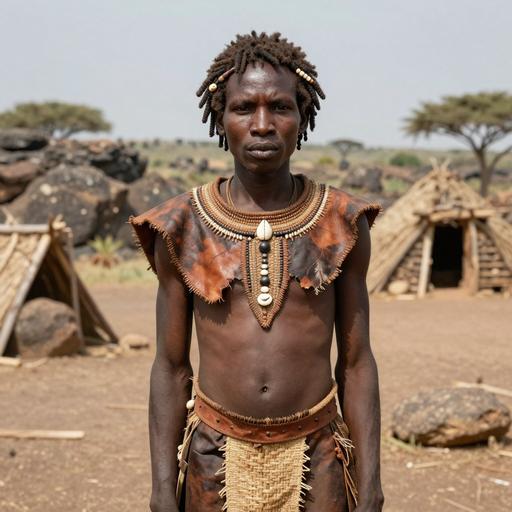
Portrait of ancient individual I13972 from Tanzania, dated 245 CE - 368 CE
I13972
Tanzania Prehistoric in Tanzania 245 CE - 368 CE Tanzanian Prehistoric E1b1b1b2b2 Direct
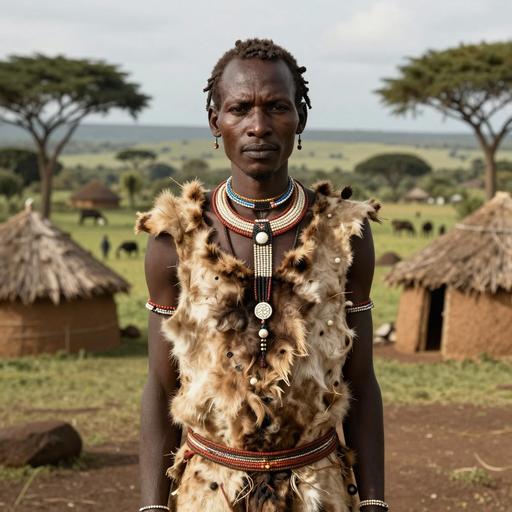
Portrait of ancient individual I13762 from Tanzania, dated 200 BCE - 1 BCE
I13762
Tanzania Prehistoric and Iron Age in Tanzania 200 BCE - 1 BCE Tanzania Multi-Period E1b1b1b2b2a1 Downstream
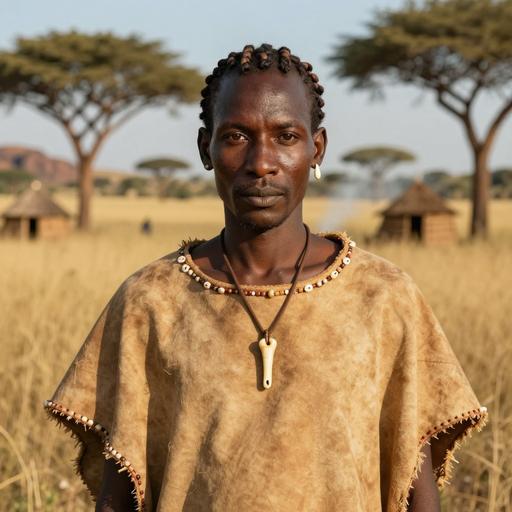
Portrait of ancient individual I12384 from Kenya, dated 215 BCE - 326 BCE
I12384
Kenya Pastoral Neolithic in Kenya 215 BCE - 326 BCE Pastoral Neolithic E1b1b1b2b2a1 Downstream
Portrait of ancient individual I12398 from Kenya, dated 767 BCE - 519 BCE
I12398
Kenya Pastoral Neolithic Elmenteitan in Kenya 767 BCE - 519 BCE Elmenteitan Culture E1b1b1b2b2a1 Downstream
Portrait of ancient individual I8809 from Kenya, dated 1111 BCE - 931 BCE
I8809
Kenya Pastoral Neolithic in Kenya 1111 BCE - 931 BCE Pastoral Neolithic E1b1b1b2b2a1 Downstream
Portrait of ancient individual I12379 from Kenya, dated 1527 CE - 1662 CE
I12379
Kenya Historic Era 2 in Kenya 1527 CE - 1662 CE Historic Era 2 E1b1b1b2b2a1 Downstream
Chapter VI

Carrier Distribution Map

Geographic distribution of 7 ancient DNA samples (direct and subclade carriers of E1B1B1B2B2)

Direct carrier Subclade carrier
Time Period Filter
All Time Periods
Showing all samples
Chapter VII

Temporal Distribution

Distribution of carriers across archaeological periods

Chapter VIII

Geographic Distribution

Distribution by country of origin (direct and subclade carriers shown by default)

Chapter IX

Country × Era Distribution

Cross-tabulation of carrier countries and archaeological periods (direct and subclade carriers shown by default)

Data

Data & Provenance

Source information and data quality

Last Updated 2026-06-16
Confidence Score 50/100
Coverage Low
Data Source

We use the latest phylotree for YDNA haplogroup classification and data.