The Story
The journey of Y-DNA haplogroup G2A2B2A1A1B
Origins and Evolution
Y-DNA haplogroup G2A2B2A1A1B is a downstream subclade of the broader G2a paternal lineage, which is strongly associated with the spread of early farming communities from the Anatolia–Caucasus–Near East region during the Neolithic. As a more derived branch within this lineage, G2A2B2A1A1B likely emerged relatively recently in genealogical terms, probably during the Late Neolithic to Chalcolithic period, after the main dispersal of G2a farmers into southeastern Europe and neighboring regions.
The phylogenetic position of this haplogroup suggests descent from populations carrying Neolithic farmer ancestry, with later local diversification in the Caucasus, Anatolia, and adjacent Near Eastern regions. Like many rare downstream G lineages, its present-day distribution probably reflects a combination of founder effects, regional continuity, and genetic drift rather than a single large-scale migration.
Subclades
As an intermediate downstream lineage, G2A2B2A1A1B may contain additional private or as-yet poorly sampled branches in the phylogenetic tree. Because it is a relatively fine-scale subclade, its internal structure is often best resolved through high-coverage Y-chromosome sequencing rather than limited SNP panels.
In practical terms, the haplogroup sits within the larger sequence of G2a → G2A2B2A1A1 → G2A2B2A1A1B, linking it to other closely related Neolithic-era branches that are distributed across the eastern Mediterranean, Anatolia, and the Caucasus.
Geographical Distribution
This lineage is expected to be rare to low-frequency in most modern populations, with the highest probability of detection in groups from the Caucasus and Anatolia, where deep regional continuity of G2a subclades is more plausible. Scattered occurrences may also be found in southern Europe, especially in populations with substantial ancestry from early European farmers, and in some Near Eastern or historically admixed communities.
Ancient DNA studies have repeatedly shown that related G2a lineages were more common among early European farmers than they are today. This pattern indicates a broad prehistoric distribution that later became more fragmented due to demographic turnover, expansions of other Y-lineages, and local bottlenecks.
Historical and Cultural Significance
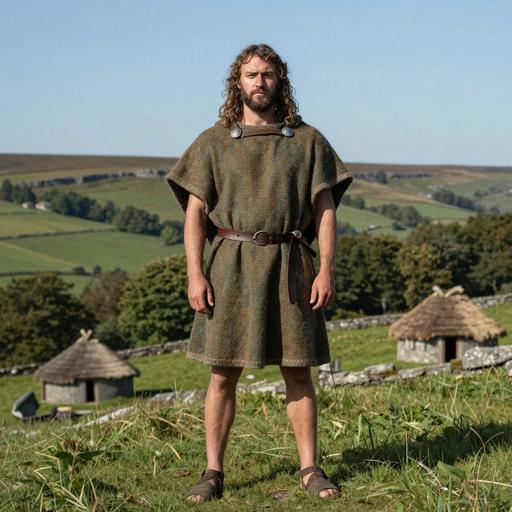
The wider G2a clade is one of the classic paternal markers associated with the Neolithic transition into Europe. While G2A2B2A1A1B itself is too specific to be directly tied to a single archaeological culture, its ancestry is consistent with communities related to Anatolian farmers, Aegean Neolithic groups, and early agricultural societies that participated in the spread of farming into southeastern and central Europe.
Its significance lies less in association with one famous historic people and more in what it represents: a surviving branch of an ancient male lineage connected to the formative demographic processes of the Neolithic. In modern populations, its rarity makes it useful for reconstructing localized paternal history and identifying continuity between ancient and present-day lineages.
Ancient DNA Context
Ancient genomes from early European farmer sites frequently include G2a, showing that this lineage was once much more widespread than it is now. A subclade such as G2A2B2A1A1B may not yet be directly observed in many published ancient samples, but it is phylogenetically compatible with the broader Neolithic farmer network documented across Anatolia, the Balkans, the Danubian corridor, and the Mediterranean.
Because finer subclades are often underrepresented in older datasets, the absence of direct ancient matches should not be interpreted as lack of antiquity. Rather, it usually reflects limited sequencing resolution and the rarity of the branch.
Conclusion
G2A2B2A1A1B is a rare, derived Y-DNA lineage nested within the historically important G2a Neolithic farmer paternal complex. Its likely homeland lies in the Anatolia/Caucasus–Near East region, and its modern distribution probably reflects ancient farmer ancestry preserved at low frequency in a few regional populations.
Key Points
- Origins and Evolution
- Subclades
- Geographical Distribution
- Historical and Cultural Significance
- Ancient DNA Context