Menu
Currency
Y-DNA Haplogroup • Paternal Lineage

R1B1A1B1A1A2C1B2A

Y-DNA Haplogroup R1B1A1B1A1A2C1B2A

~14,000 years ago
West Eurasia
1 subclades
Scroll to explore
Chapter I

The Story

The journey of Y-DNA haplogroup R1B1A1B1A1A2C1B2A

Origins and Evolution

Y-DNA haplogroup R1b1a1b1a1a2c1b2 is a rare subclade within western Eurasian R1b, a paternal lineage that ultimately traces back to post-Last Glacial Maximum populations of West Eurasia. Based on its phylogenetic position and the distribution of its descendant and sibling branches, this clade likely emerged around 14 thousand years ago in West Eurasia, or in a nearby refuge-zone connected to later western Eurasian expansions.

As an intermediate clade in the R1b tree, it is best interpreted as part of a deep branching structure that predates major Holocene population movements. Its present rarity suggests that it did not undergo the dramatic population expansions seen in some later R1b branches, but instead persisted through bottlenecks, drift, and localized founder effects. The scattered geographic pattern is consistent with a lineage that survived in multiple small pockets over long periods rather than one that spread from a single strong expansion event.

Subclades

Because R1b1a1b1a1a2c1b2 is an intermediate lineage, its importance lies in connecting broader R1b diversity to more specific downstream branches. Subclades below this level may represent localized lineages associated with distinct prehistoric or historic populations, but the exact branching structure can remain sparse in public datasets because of the rarity of the clade.

In general, rare R1b branches like this one may be informative for:

  • identifying deep regional continuity in paternal ancestry
  • reconstructing microfounder events in small populations
  • clarifying the relationship between Atlantic European, Mediterranean, Caucasus-Anatolian, and steppe-adjacent R1b lineages

Geographical Distribution

This haplogroup is reported at low frequency across a broad but discontinuous West Eurasian range. The pattern includes Irish and British populations, French, Iberian, and Low Countries populations, Italian and Balkan populations, Caucasus and Anatolian populations, Levantine and North African populations, and some Central Asian and steppe-related populations.

Such a distribution does not imply a single recent expansion across all these regions. Instead, it is more likely the result of a combination of ancient retention, small-scale migration, maritime and overland gene flow, and regional survival of old paternal lines. The presence in Atlantic Europe may reflect long-term continuity within broader R1b-bearing populations, while occurrences in the Mediterranean and Near East may reflect historical mobility along trade networks and repeated episodes of gene flow across the eastern Mediterranean and Caucasus-Anatolia corridor.

Historical and Cultural Significance

Rare R1b subclades are often of interest because they can illuminate the hidden diversity within well-known Western Eurasian paternal lineages. While this haplogroup cannot be confidently tied to a single archaeological culture without direct ancient DNA evidence, its age and distribution make it broadly compatible with populations participating in the Late Mesolithic, Neolithic, Chalcolithic, and Bronze Age demographic landscape of West Eurasia.

Its broad presence in regions connected to the Atlantic façade, the Mediterranean world, and the Caucasus-Anatolia interface suggests that some lineages may have moved through networks associated with:

  • early postglacial recolonization of Europe
  • Neolithic and Chalcolithic demographic mixing
  • Bronze Age mobility and exchange
  • later historic-era population movements across the Mediterranean and Near East

Because it is rare, the haplogroup is more likely to represent lineage survival than a major elite expansion. That said, rare paternal branches can persist in historically important communities and may be overrepresented in isolated or founder-rich populations.

Conclusion

R1b1a1b1a1a2c1b2 is a deep and uncommon West Eurasian R1b lineage whose significance lies in the information it provides about the long-term persistence and regional fragmentation of paternal ancestry. Its distribution across western Europe, the Mediterranean, the Caucasus, and adjacent regions points to an ancient origin followed by limited dispersal, drift, and local continuity rather than a large-scale single origin event.

Interpretation Notes

Because this haplogroup is rare, conclusions should be treated as phylogeographic hypotheses grounded in its tree position and known regional occurrences. Direct ancient DNA samples assigned to this exact subclade would be especially valuable for refining its age, origin, and historical associations.

Key Points

  • Origins and Evolution
  • Subclades
  • Geographical Distribution
  • Historical and Cultural Significance
  • Conclusion
Chapter II

Tree & Relationships

Phylogenetic context and subclades

Evolution Path

This haplogroup's evolutionary journey from its earliest ancestor to the present.

Steps Haplogroup Age Estimate Archaeology Era Time Passed Immediate Descendants Tested Modern Descendants Ancient Connections
1 R1B1A1B1A1A2C1B2A Current ~14,000 years ago 🏹 Mesolithic 14,000 years 1 0 0
2 R1B1A1B1A1A2C1B2 ~14,000 years ago 🏹 Mesolithic 14,000 years 1 0 0
3 R1B1A1B1A1A2C1B ~14,000 years ago 🏹 Mesolithic 14,000 years 2 0 5
4 R1B1A1B1A1A2C1 ~14,000 years ago 🏹 Mesolithic 14,000 years 2 581 0
5 R1B1A1B1A1A2C ~14,000 years ago 🏹 Mesolithic 14,000 years 1 582 111
6 R1B1A1B1A1A2 ~14,000 years ago 🏹 Mesolithic 14,000 years 6 916 0
7 R1B1A1B1A1A ~14,000 years ago 🏹 Mesolithic 14,000 years 4 1,254 70
8 R1B1A1B1A1 ~14,000 years ago 🏹 Mesolithic 14,000 years 1 1,292 0
9 R1B1A1B1A ~14,000 years ago 🏹 Mesolithic 14,000 years 2 1,295 15
10 R1B1A1B1 ~18,000 years ago 🏹 Mesolithic 18,000 years 2 1,529 0
11 R1B1A1B ~18,000 years ago 🏹 Mesolithic 18,000 years 2 1,655 31
12 R1B1A1 ~18,000 years ago 🏹 Mesolithic 18,000 years 2 1,657 0
13 R1B1A ~18,000 years ago 🏹 Mesolithic 18,000 years 2 3,825 39
14 R1B1 ~18,000 years ago 🏹 Mesolithic 18,000 years 2 3,967 0
15 R1b ~20,000 years ago 🏹 Mesolithic 20,000 years 2 4,036 126
Chapter III

Where in the World

Geographic distribution and modern presence

Place of Origin

West Eurasia

Modern Distribution

The populations where Y-DNA haplogroup R1b1a1b1a1a2c1b2 is found include:

  1. Irish and British populations
  2. French, Iberian, and Low Countries populations
  3. Italian and Balkan populations
  4. Caucasus and Anatolian populations
  5. Levantine and North African populations
  6. Some Central Asian and steppe-related populations

Regional Presence

Western Europe High
Southwestern Europe (Northern Iberia) Moderate
Central Europe Low
Northern Europe (Scandinavia) Low
North Africa (coastal) Low
North America (diaspora) Low
Oceania (diaspora) Low
Southern Europe Low
Western Asia Low
Central Asia Low
CHAPTER IV

When in Time

Your haplogroup in the context of human history

~20k years ago

Last Glacial Maximum

Peak of the last ice age, populations isolated

~14k years ago

Haplogroup R1B1A1B1A1A2C1B2A

Your Y-DNA haplogroup emerged in West Eurasia

West Eurasia
~10k years ago

Neolithic Revolution

Agriculture begins, settled communities form

~5k years ago

Bronze Age

Metalworking, writing, and early civilizations

~3k years ago

Iron Age

Iron tools, expanded trade networks

~2k years ago

Classical Antiquity

Greek and Roman civilizations flourish

Present

Present Day

Modern era

Your Haplogroup
Historical Era
Chapter IV-B

Linked Cultures

Ancient cultures associated with Y-DNA haplogroup R1B1A1B1A1A2C1B2A

Cultural Heritage

These ancient cultures have been linked to haplogroup R1B1A1B1A1A2C1B2A based on matching ancient DNA samples from archaeological excavations. The presence of this haplogroup in these cultures provides insights into the migrations and population movements of populations carrying this haplogroup.

Bell Beaker British Chalcolithic British Middle Bronze Age British Neolithic Scottish Bronze Age
Culture assignments are based on archaeological context of ancient DNA samples and may represent regional associations during specific time periods.
Chapter V

Sample Catalog

2 subclade carriers of haplogroup R1B1A1B1A1A2C1B2A (no exact R1B1A1B1A1A2C1B2A samples sequenced yet)

2 / 2 samples
Portrait Sample Country Era Date Culture Y-DNA Match
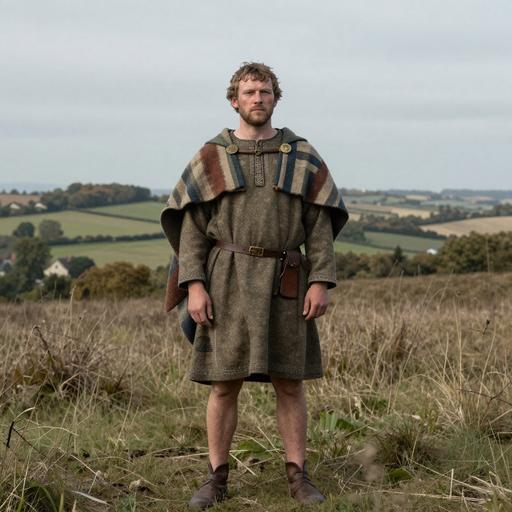
Portrait of ancient individual I11997 from United Kingdom, dated 377 BCE - 197 BCE
I11997
United Kingdom Middle Iron Age England 377 BCE - 197 BCE Middle Iron Age British R1b1a1b1a1a2c1b2a1a1a Downstream
Portrait of ancient individual VK345 from Sweden, dated 800 CE - 1100 CE
VK345
Sweden Viking Age Sweden 800 CE - 1100 CE Viking R1b1a1b1a1a2c1b2a1a1 Downstream
Chapter VI

Carrier Distribution Map

Geographic distribution of 2 ancient DNA samples (direct and subclade carriers of R1B1A1B1A1A2C1B2A)

Subclade carrier
Time Period Filter
All Time Periods
Showing all samples
Chapter VII

Temporal Distribution

Distribution of carriers across archaeological periods

Chapter VIII

Geographic Distribution

Distribution by country of origin (direct and subclade carriers shown by default)

Chapter IX

Country × Era Distribution

Cross-tabulation of carrier countries and archaeological periods (direct and subclade carriers shown by default)

Data

Data & Provenance

Source information and data quality

Last Updated 2026-06-17
Confidence Score 50/100
Coverage Low
Data Source

We use the latest phylotree for YDNA haplogroup classification and data.