The Story
The journey of mtDNA haplogroup L3E1A2
Origins and Evolution
mtDNA haplogroup L3E1A2 sits within the broader L3E branch of macro-haplogroup L3, a lineage that arose in Africa and gave rise to many modern sub-Saharan maternal clades. As a downstream subclade of L3E1A (through the intermediate L3E1AA node), L3E1A2 is expected to have diversified during the Holocene, after the initial radiation of L3 (~60–70 kya). Given the phylogenetic position of L3E1A2 and the distribution of closely related L3E subclades, a reasonable inference is an origin in West or Central Africa approximately 3–6 kya, though direct dating requires more complete phylogenetic calibrations and calibrated molecular-clock analyses.
Subclades (if applicable)
At present, L3E1A2 is treated as a defined terminal or near-terminal subclade in available reference trees; further high-resolution mitogenome sequencing across under-sampled African populations is required to characterize any internal subclades reliably. Because L3E diversifies into many localized lineages, it is plausible L3E1A2 contains additional, geographically restricted branches that have not yet been widely sampled or published.
Geographical Distribution
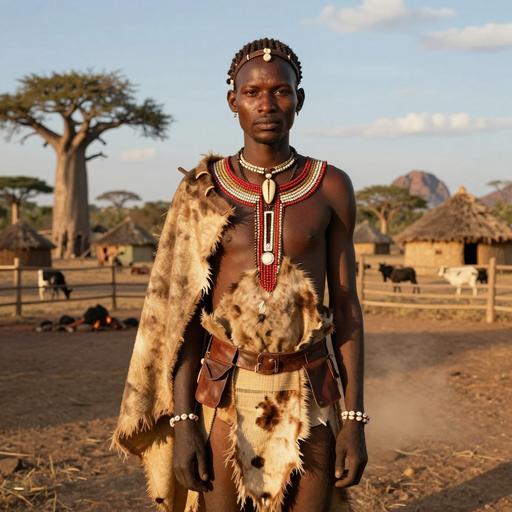
L3E1A2 is expected primarily in sub-Saharan Africa, with the strongest signals inferred in West and Central African populations. Related L3E subclades are frequent among Bantu-speaking peoples and other West/Central African groups, and consequently L3E1A2 may be found at lower frequencies in East Africa and in populations of the African diaspora in the Americas due to historical movements (including the transatlantic slave trade). Precise frequency maps for L3E1A2 require targeted mitogenome surveys.
Historical and Cultural Significance
Because of its inferred time depth and geographic placement, L3E1A2 is plausibly linked to demographic processes of the later Holocene in Africa, notably the expansion and dispersal of Bantu-speaking agriculturalists (roughly 3–5 kya) from a West/Central African homeland. Such expansions redistributed many L haplogroups across large parts of sub-Saharan Africa. L3E1A2 may therefore serve as a genetic tracer for regional maternal ancestry and local demographic events (e.g., population growth, assimilation of forager groups) rather than marking ancient Paleolithic migrations.
Conclusion
L3E1A2 represents a relatively recent, regionally focused maternal lineage within the L3E phylogeny. Current knowledge is largely inferential—based on its phylogenetic position under L3E1A and the distribution patterns of related subclades—so fuller characterization depends on additional complete mitochondrial genome sequencing from West, Central and East African populations and integration with archaeological and linguistic evidence. Where present, L3E1A2 contributes to the picture of Holocene demographic change in sub-Saharan Africa and the maternal ancestry of many modern African and African-descended populations.
Key Points
- Origins and Evolution
- Subclades (if applicable)
- Geographical Distribution
- Historical and Cultural Significance
- Conclusion