The Story
The journey of mtDNA haplogroup U4D1
Origins and Evolution
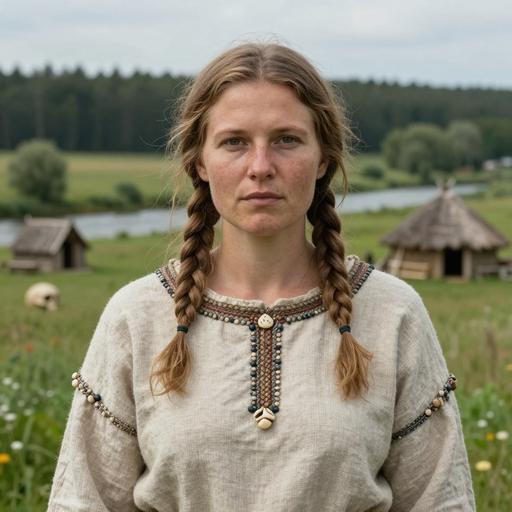
mtDNA U4D1 sits within the broader U4 family, an ancient European-associated maternal lineage that has roots in Paleolithic and Mesolithic Eurasia. As a named subclade of U4DA, U4D1 represents a later branching event within the U4d substructure. Based on the phylogenetic position of U4 subclades and radiocarbon-dated ancient DNA bearing related U4 lineages, U4D1 most plausibly coalesced during the late Neolithic to Early Bronze Age (several thousand years before present), likely in regions around the eastern Baltic, northeastern Europe or the forest-steppe of western Russia.
This timing and geography place U4D1 in a zone where continuity of Mesolithic maternal lineages and incoming Neolithic/Bronze Age gene flows overlapped; therefore its evolution probably reflects both local survival of older U4 diversity and demographic shifts associated with later prehistoric cultural expansions.
Subclades
U4D1 is an intermediate clade within the U4DA branch. As currently defined in Phylotree and by available population sampling, U4D1 has limited publicly reported downstream diversity compared with major U4 branches. That limited diversity may reflect either a genuine recent origin or undersampling of modern and ancient populations in northeastern Europe and western Siberia. Additional full mitogenome sequencing of targeted populations and ancient remains is needed to clarify any child clades and internal structure of U4D1.
Geographical Distribution
Modern and ancient DNA evidence for the broader U4 complex shows strong representation across northern and eastern Europe and into parts of western Siberia. For U4D1 specifically, reported occurrences (modern and ancient) are concentrated at low-to-moderate frequencies in: the Baltic region, Finnic-speaking populations and Scandinavia, northeastern Europe (Russia), and some northern Siberian groups. Its distribution is patchy rather than ubiquitous, consistent with a maternal lineage that persisted regionally and was later spread or diluted by subsequent migrations.
Historical and Cultural Significance
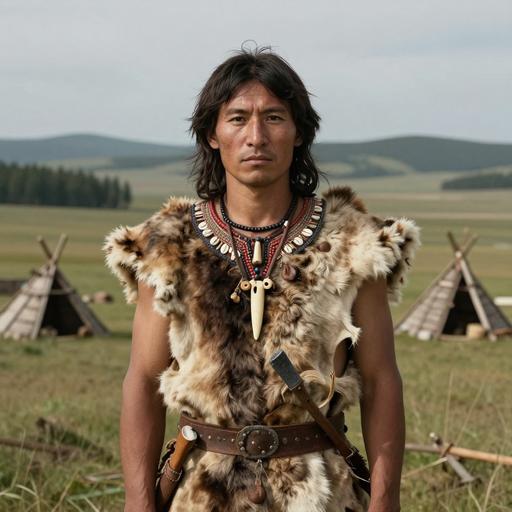
U4 lineages are often interpreted as markers of pre-Neolithic and early Holocene hunter-gatherer ancestry in Europe. U4D1, arising later within that framework, may reflect continuity of maternal hunter-gatherer-derived lineages that became incorporated into Neolithic and Bronze Age cultural complexes. Ancient DNA studies have found related U4 variants in Mesolithic and later Bronze Age individuals, and U4 subclades appear intermittently in Corded Ware- and steppe-associated contexts (including some Yamnaya- and post-Yamnaya-associated burials). Thus, U4D1 may be associated with the demographic processes of the late Neolithic — including local persistence, admixture with incoming farmer or steppe groups, and regional expansions during the Bronze Age.
Because the clade is relatively narrowly defined and understudied, its specific cultural associations remain provisional; future targeted sampling of ancient remains from the eastern Baltic, Finland, northwestern Russia and adjacent Siberia will sharpen the picture.
Conclusion
U4D1 is a regionally informative mtDNA subclade reflecting northern/eastern European maternal history. It likely arose in the late Neolithic to Early Bronze Age in or near the eastern Baltic/western Russian zone and today survives at low-to-moderate frequencies in northern and northeastern Europe and parts of western Siberia. More full mitogenome sequencing and ancient DNA sampling are needed to refine its age, substructure and precise archaeological associations.
Key Points
- Origins and Evolution
- Subclades
- Geographical Distribution
- Historical and Cultural Significance
- Conclusion