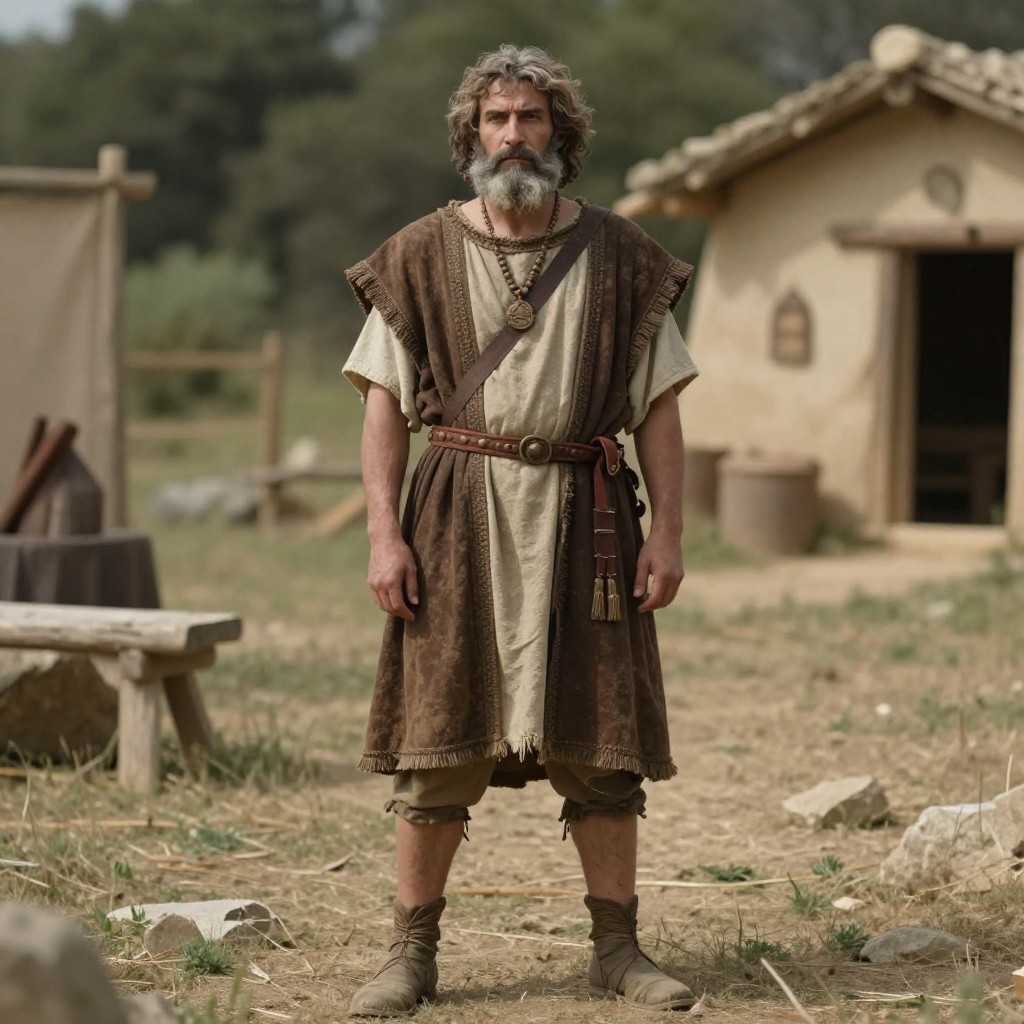
The Story
The journey of Y-DNA haplogroup G2A2B2B1A
Origins and Evolution
Y-DNA haplogroup G2A2B2B1A is a rare subclade of G2A2B2B1, itself part of the broader G2 haplogroup. The wider G2 lineage is strongly associated with the spread of Neolithic farming communities from the Anatolian–Near Eastern zone into Europe and adjacent regions. On phylogenetic grounds, G2A2B2B1A likely arose after the initial diversification of G2-associated farmer paternal lines, placing its origin in the Late Neolithic or early post-Neolithic period, roughly around 5 thousand years ago.
Because it is a downstream branch of an already uncommon lineage, G2A2B2B1A is expected to have had a small effective founder population and limited demographic expansion. Its present-day rarity suggests that it survived mainly through localized descent rather than large-scale population growth.
Subclades
This haplogroup is an intermediate-to-terminal branch within the G2 tree. As a very rare lineage, it may have few or no widely documented downstream subclades in public datasets, and its exact internal structure may continue to be refined as additional Y-chromosome sequencing becomes available.
Geographical Distribution
G2A2B2B1A is expected to be found at very low frequencies in regions historically connected to early West Asian farmers and their descendants. The best-supported areas include:
- Anatolia and the eastern Mediterranean
- The South Caucasus, including Georgian, Armenian, and Azerbaijani populations
- Parts of the Balkans, especially groups with strong Neolithic or Near Eastern admixture histories
- Southern Europe, including populations such as Italians, Greeks, and Sardinians at low frequency
- Selected Jewish and Levantine communities at very low frequency
- Ancient DNA from Neolithic and later prehistoric contexts in western Anatolia and Europe
Historical and Cultural Significance
The broader G2 lineage is one of the classic paternal markers associated with the spread of agriculture from Southwest Asia. G2A2B2B1A does not identify a single historical people or culture by itself, but it fits within paternal lineages that were likely carried by Neolithic farmers, later persisting in regions where early agricultural ancestry remained substantial.
Its presence in the Caucasus and eastern Mediterranean may reflect long-term continuity, localized drift, and repeated regional mixing rather than a single migration event. In Europe, any occurrence of this lineage is most plausibly linked to early farmer ancestry and subsequent demographic layering in the Bronze Age and later periods.
Population Genetics Context
From a population genetics perspective, G2A2B2B1A is important because rare subclades can help distinguish fine-scale paternal continuity within broader haplogroups. Such lineages are often most informative in high-resolution phylogenetic analyses, ancient DNA studies, and regional genealogical work.
Although rare today, its position below a Neolithic-associated parent clade suggests a history shaped by founder effects, drift, and localized survival rather than widespread expansion. This is typical of many deep subbranches within G2 and other early West Eurasian paternal lineages.
Conclusion
Y-DNA haplogroup G2A2B2B1A is a rare and informative branch of the West Asian Neolithic paternal tree. Its likely origin in the Anatolian–Near Eastern sphere and its low-frequency distribution across the Caucasus, Anatolia, and southern Europe make it a useful marker of ancient farmer-related ancestry and regional genetic persistence.
Key Points
- Origins and Evolution
- Subclades
- Geographical Distribution
- Historical and Cultural Significance
- Population Genetics Context