Menu
Currency
Y-DNA Haplogroup • Paternal Lineage

I1A2A

Y-DNA Haplogroup I1A2A

~10,000 years ago
Northern Europe
2 subclades
10 ancient samples
Scroll to explore
Chapter I

The Story

The journey of Y-DNA haplogroup I1A2A

Origins and Evolution

Y-DNA haplogroup I1A2A is a downstream branch of I1A2, itself a subclade of I1, one of the major paternal lineages of northern Europe. Its deepest ancestral roots likely lie in post-glacial Northern Europe, where Mesolithic hunter-gatherer populations and their descendants formed localized paternal lineages after the Last Glacial Maximum. An origin around 9.5 thousand years ago is consistent with the broader diversification of I1-derived branches in temperate Europe during the early Holocene.

Because I1A2A is an intermediate clade, it should be interpreted as a phylogenetic link between broader I1A2 diversity and more terminal descendant lineages. The precise archaeological context for this subclade is not always directly tied to a single culture, but its distribution pattern is most compatible with gradual regional differentiation in Scandinavia, the Baltic region, and adjacent parts of northern and central Europe.

Subclades

As an intermediate haplogroup, I1A2A may contain multiple downstream branches not always equally represented in public datasets. In general, subclades beneath I1A2A would be expected to show localized founder effects, especially in regions where I1 lineages achieved high frequencies through drift and repeated expansion. More refined resolution often comes from modern high-coverage sequencing and Y-chromosome phylogenies that continue to add new branches.

Geographical Distribution

The distribution of I1A2A is expected to mirror the broader pattern of I1-derived lineages, with highest representation in Scandinavia and meaningful presence in neighboring parts of Northwest, Northern, and Central Europe. It can also occur at lower frequencies in Eastern Europe and the Balkans through historical migration, medieval mobility, and more recent population movements.

In modern populations, the haplogroup is most plausibly enriched among Swedes, Norwegians, Danes, Finns, Icelanders, and other North European groups, with additional occurrences among Germans, Dutch, British and Irish, Balts, and East Slavs. Outside Europe, it may appear in diaspora communities in the Americas and Oceania due to recent emigration.

Historical and Cultural Significance

Broadly, I1 is often discussed in relation to the genetic history of prehistoric northern European hunter-gatherers, later Bronze Age and Iron Age population structures, and historic expansions associated with Germanic-speaking and Scandinavian populations. For I1A2A, the strongest historical significance is likely not a single named migration event, but rather its role as part of the paternal diversity that helped shape the genetic landscape of northern Europe over the last several millennia.

Lineages within I1 and its subclades have been observed in contexts relevant to Corded Ware-era and post-Corded Ware northern European ancestry, though any direct assignment to a specific archaeological culture for I1A2A should be treated cautiously unless supported by ancient DNA from a diagnostic sample. Its modern distribution reflects both ancient regional persistence and later founder-driven expansions.

Conclusion

Y-DNA haplogroup I1A2A is a relatively localized northern European paternal subclade that likely formed during the early Holocene in the aftermath of deglaciation. It is best understood as part of the broader I1 phylogenetic network, with strongest relevance to Scandinavian and adjacent European population history, and with modern frequencies shaped by both deep ancestry and historical demographic movements.

Key Points

  • Origins and Evolution
  • Subclades
  • Geographical Distribution
  • Historical and Cultural Significance
  • Conclusion
Chapter II

Tree & Relationships

Phylogenetic context and subclades

Evolution Path

This haplogroup's evolutionary journey from its earliest ancestor to the present.

Steps Haplogroup Age Estimate Archaeology Era Time Passed Immediate Descendants Tested Modern Descendants Ancient Connections
1 I1A2A Current ~10,000 years ago 🌾 Neolithic 9,500 years 2 217 10
2 I1A2 ~10,000 years ago 🌾 Neolithic 9,500 years 2 407 0
3 I1A ~10,000 years ago 🌾 Neolithic 10,000 years 5 890 16
4 I1 ~20,000 years ago 🏹 Mesolithic 20,000 years 3 1,345 2
5 I ~25,000 years ago 🦴 Paleolithic 25,000 years 4 3,404 79

Siblings (1)

Other branches from the same parent haplogroup

Chapter III

Where in the World

Geographic distribution and modern presence

Place of Origin

Northern Europe

Modern Distribution

The populations where Y-DNA haplogroup I1A2A haplogroup I1A2A is found include:

  1. Scandinavians
  2. Germans and Austrians
  3. British and Irish populations
  4. Baltic populations
  5. East Slavic populations
  6. Balkan populations
  7. Central European populations
  8. Recent diaspora populations in the Americas and Australia

Regional Presence

Northern Europe (Scandinavia) High
Western Europe (British Isles, Netherlands) Moderate
Central Europe (Northern Germany) Moderate
Eastern Europe / Baltic Low
North America (diaspora) Low
Southern Europe Low
Australia and New Zealand Low
CHAPTER IV

When in Time

Your haplogroup in the context of human history

~10k years ago

Neolithic Revolution

Agriculture begins, settled communities form

~9k years ago

Haplogroup I1A2A

Your Y-DNA haplogroup emerged in Northern Europe

Northern Europe
~5k years ago

Bronze Age

Metalworking, writing, and early civilizations

~3k years ago

Iron Age

Iron tools, expanded trade networks

~2k years ago

Classical Antiquity

Greek and Roman civilizations flourish

Present

Present Day

Modern era

Your Haplogroup
Historical Era
Chapter IV-B

Linked Cultures

Ancient cultures associated with Y-DNA haplogroup I1A2A

Cultural Heritage

These ancient cultures have been linked to haplogroup I1A2A based on matching ancient DNA samples from archaeological excavations. The presence of this haplogroup in these cultures provides insights into the migrations and population movements of populations carrying this haplogroup.

Avar Danish Iron Age Danish Medieval Danish Post-Medieval Norse Greenland Saxon Schleswig Viking Denmark
Culture assignments are based on archaeological context of ancient DNA samples and may represent regional associations during specific time periods.
Chapter V

Sample Catalog

8 direct carriers and 2 subclade carriers of haplogroup I1A2A

10 / 10 samples
Portrait Sample Country Era Date Culture Y-DNA Match
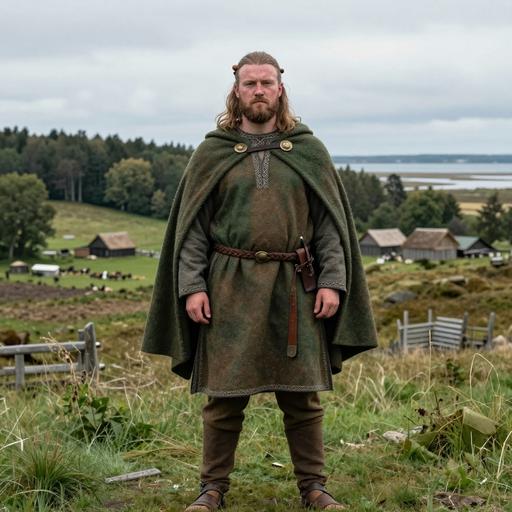
Portrait of ancient individual VK532 from Denmark, dated 1 CE - 200 CE
VK532
Denmark Iron Age Denmark 1 CE - 200 CE Danish Iron Age I1a2a Direct
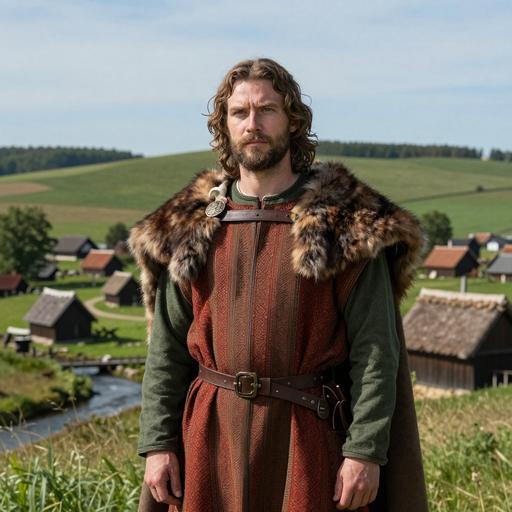
Portrait of ancient individual VK301 from Denmark, dated 515 CE - 1015 CE
VK301
Denmark Viking Age Denmark 515 CE - 1015 CE Viking Denmark I1a2a Direct
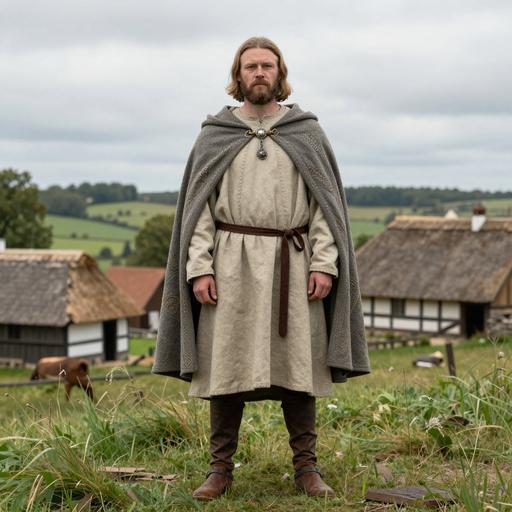
Portrait of ancient individual CGG100687 from Denmark, dated 1000 CE - 1300 CE
CGG100687
Denmark Medieval Danish 1000 CE - 1300 CE Danish Medieval I1a2a Direct
Portrait of ancient individual CGG100926 from Denmark, dated 1000 CE - 1300 CE
CGG100926
Denmark Medieval Danish 1000 CE - 1300 CE Danish Medieval I1a2a Direct
Portrait of ancient individual CGG100679 from Denmark, dated 1300 CE - 1350 CE
CGG100679
Denmark Medieval Danish 1300 CE - 1350 CE Danish Medieval I1a2a Direct
Portrait of ancient individual CGG101835 from Denmark, dated 1350 CE - 1400 CE
CGG101835
Denmark Medieval Danish 1350 CE - 1400 CE Danish Medieval I1a2a Direct
Portrait of ancient individual CGG101843 from Denmark, dated 1350 CE - 1400 CE
CGG101843
Denmark Medieval Danish 1350 CE - 1400 CE Danish Medieval I1a2a Direct
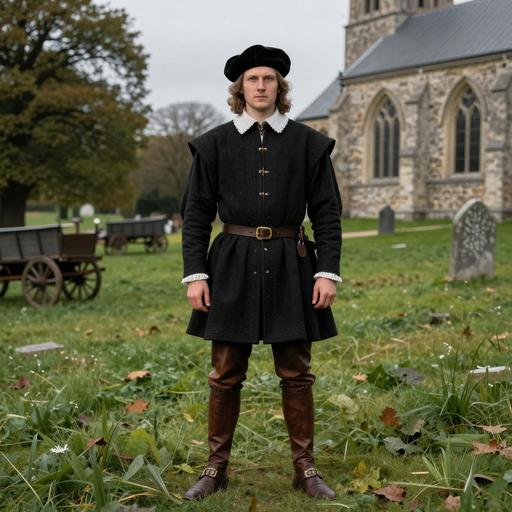
Portrait of ancient individual CGG100453 from Denmark, dated 1536 CE - 1806 CE
CGG100453
Denmark Danish Post-Medieval 1536 CE - 1806 CE Danish Post-Medieval I1a2a Direct
Portrait of ancient individual VK446 from Denmark, dated 800 CE - 1100 CE
VK446
Denmark Viking Age Denmark 800 CE - 1100 CE Viking Denmark I1a2a2 Downstream
Portrait of ancient individual VK445 from Denmark, dated 800 CE - 1100 CE
VK445
Denmark Viking Age Denmark 800 CE - 1100 CE Viking Denmark I1a2a2 Downstream
Chapter VI

Carrier Distribution Map

Geographic distribution of 10 ancient DNA samples (direct and subclade carriers of I1A2A)

Direct carrier Subclade carrier
Time Period Filter
All Time Periods
Showing all samples
Chapter VII

Temporal Distribution

Distribution of carriers across archaeological periods

Chapter VIII

Geographic Distribution

Distribution by country of origin (direct and subclade carriers shown by default)

Chapter IX

Country × Era Distribution

Cross-tabulation of carrier countries and archaeological periods (direct and subclade carriers shown by default)

Data

Data & Provenance

Source information and data quality

Last Updated 2026-06-17
Confidence Score 50/100
Coverage Low
Data Source

We use the latest phylotree for YDNA haplogroup classification and data.