The Story
The journey of Y-DNA haplogroup I1A2A2A
Origins and Evolution
Y-DNA haplogroup I1A2A2A is a downstream subclade of I1A2A2, itself nested within the broader I1 paternal lineage. Because I1 is one of the major northern European Y-chromosome lineages and is strongly associated with post-glacial re-expansion in Europe, this subclade most likely represents a late regional branching event within an older Mesolithic-derived lineage.
At this level of the phylogeny, the available evidence generally supports fine-scale diversification rather than a single large prehistoric replacement. The branch likely formed somewhere in northern Europe, probably in the wider Scandinavian–Baltic–north German sphere, during the mid-Holocene or later, as local populations differentiated after the initial post-Ice Age recolonization of northern Europe.
Subclades
I1A2A2A is an intermediate-level clade that sits between its parent branch and any more terminal descendant branches. In practical terms, such subclades are often important for connecting:
- broader regional lineages,
- geographically structured founder effects,
- and more recent genealogical expansions within historic populations.
Because it is a relatively specific branch, I1A2A2A may be enriched in some local or clan-level lineages even if it remains rare overall at continental scale.
Geographical Distribution
The broader I1 lineage is most strongly associated with Scandinavia, but downstream branches like I1A2A2A can also appear across north-central Europe and into neighboring regions through migration, trade, and historical population movement.
Based on its parentage and the reported distribution of related I1 lineages, I1A2A2A is expected to occur in:
- Scandinavia, especially Sweden, Norway, and Denmark
- Germanic-speaking populations in Germany and Austria
- British and Irish populations
- Baltic populations
- East Slavic populations
- Balkan populations at lower frequencies
- Central European populations more broadly
- Diaspora populations in the Americas and Australia
Its highest frequencies would be expected in northern Europe, with decreasing frequency toward southern and eastern Europe.
Historical and Cultural Significance
The I1 paternal lineage is often discussed in relation to European post-glacial continuity, hunter-gatherer ancestry, and later North European demographic expansions. While I1A2A2A itself cannot be assigned to a single archaeological culture without direct ancient DNA evidence, related I1 branches have been observed or inferred in contexts associated with:
- Mesolithic hunter-gatherers in northern Europe,
- Neolithic and Bronze Age population restructuring,
- and later Iron Age and medieval northern European societies.
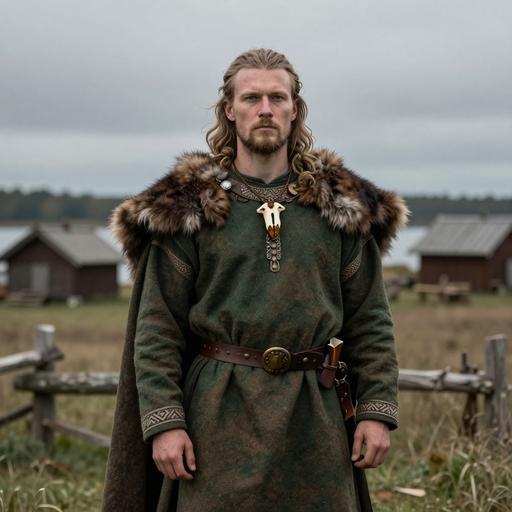
In historical genetics, subclades like I1A2A2A are useful for identifying localized paternal founder effects that may have expanded within tribal, regional, or clan-based social systems. In Scandinavia and adjacent regions, such branches may reflect the layered demographic history underlying later Germanic and Viking-age populations.
Relationship to Other Haplogroups
I1A2A2A belongs to a part of the Y-chromosome tree that is often contrasted with other major northern European lineages such as R1a, R1b, and certain branches of N in the northeast Baltic and Finnic sphere. It is not usually interpreted as directly co-occurring with any specific mtDNA lineage, but in population studies it commonly appears alongside the broader autosomal ancestry profiles typical of north European populations.
Conclusion
Y-DNA haplogroup I1A2A2A is a northern European subclade representing a later branch of the ancient I1 paternal lineage. Its significance lies in documenting the fine-scale diversification of male lineages in Scandinavia and neighboring regions, bridging deep Mesolithic ancestry with later historic population structure across northern and central Europe.
Key Points
- Origins and Evolution
- Subclades
- Geographical Distribution
- Historical and Cultural Significance
- Relationship to Other Haplogroups