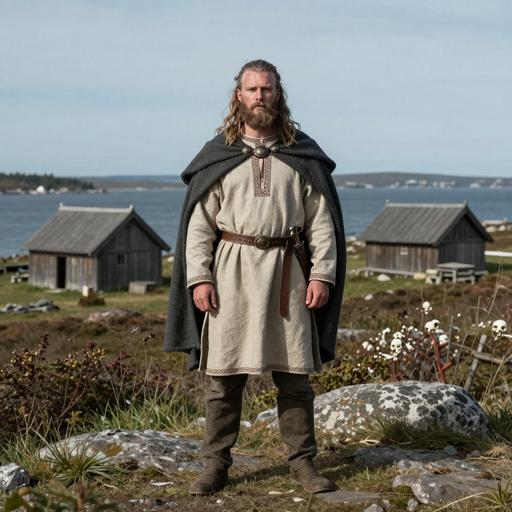
The Story
The journey of Y-DNA haplogroup N1A1A1A1A1A1A
Origins and Evolution
Y-DNA haplogroup N1A1A1A1A1A1A is a deeply downstream branch of haplogroup N, one of the major paternal lineages associated with northern Eurasia. Based on its position in the phylogeny and the context of its parent clade, this lineage is best interpreted as a very recent local derivative of a broader circum-Baltic / western Siberian Y-chromosome network rather than an ancient pan-Eurasian expansion lineage.
Its estimated age is on the order of ~1.5 kya, which implies a late historical origin in the early medieval to post-medieval period. Such a time depth is consistent with founder effects, in which a single male lineage rapidly increases in frequency within a relatively small community or kin group, especially in forest-zone societies with low effective population sizes.
Subclades
Because this haplogroup is an extremely downstream branch, it is expected to have few or no widely documented subclades in current public phylogenies. In practice, lineages at this depth often remain rare until additional high-resolution Y-chromosome sequencing identifies finer internal branching.
The phylogenetic context suggests continuity with other late-derived branches of haplogroup N, especially those concentrated among Uralic-speaking and northern East European populations. Its relationship to neighboring branches would be best understood through high-coverage SNP sequencing and comparison with ancient DNA from the Baltic, Finnish, and western Siberian forest zones.
Geographical Distribution
The distribution of N1A1A1A1A1A1A is expected to be highly localized rather than broad. It is most plausibly found in populations of the circum-Baltic region and western Siberia, particularly where paternal lineages have experienced drift and endogamy.
Likely geographic settings include:
- Finland and adjacent Baltic-Finnic populations
- Sámi communities of northern Fennoscandia
- Estonian, Latvian, and Lithuanian populations at low frequency
- Khanty, Mansi, Nenets, and Komi or related Uralic-speaking groups
- Western Siberian forest-zone populations
- Northern East European populations with Uralic or Finnic ancestry components
Overall frequency is expected to be low to very low, with the possibility of being concentrated in one or a few lineages due to recent expansion from a common ancestor.
Historical and Cultural Significance
This haplogroup is most plausibly associated with the late history of Uralic-speaking forest populations, where Y-lineages often underwent strong drift and localized expansion. Its presence in northern East Europe and western Siberia would fit demographic processes involving small population size, patrilocality, clan structure, and repeated founder events.
Unlike older branches of haplogroup N that can be tied to broad prehistoric dispersals across northern Eurasia, N1A1A1A1A1A1A likely reflects a micro-regional lineage that gained prominence within a specific community after the main Uralic and circumboreal demographic frameworks were already established. If detected in ancient samples, it would be most informative in the context of medieval or late prehistoric northern Eurasian populations.
Interpretation in Population Genetics
From a population-genetic perspective, this lineage should be treated as a terminal or near-terminal marker of recent paternal ancestry rather than a proxy for ancient macro-population movements. Its scientific significance lies in tracing fine-scale relatedness, local founder events, and historical male-mediated continuity across the forest zone of northern Eurasia.
Because of its recent origin, the haplogroup is expected to show:
- Low overall diversity
- High phylogenetic clustering
- Strong geographic structure
- Potential enrichment in isolated or endogamous populations
Conclusion
Y-DNA haplogroup N1A1A1A1A1A1A is a rare, recent subclade of haplogroup N that likely arose in North Eurasia within a circum-Baltic or western Siberian context. Its importance lies not in deep prehistory, but in revealing recent paternal continuity, founder effects, and regional population history among Uralic and northern East European groups.
Key Points
- Origins and Evolution
- Subclades
- Geographical Distribution
- Historical and Cultural Significance
- Interpretation in Population Genetics