Menu
Currency
Y-DNA Haplogroup • Paternal Lineage

N1A1A1A1A1A2A

Y-DNA Haplogroup N1A1A1A1A1A2A

~2,000 years ago
North Eurasia
1 subclades
Scroll to explore
Chapter I

The Story

The journey of Y-DNA haplogroup N1A1A1A1A1A2A

Origins and Evolution

Y-DNA haplogroup N1A1A1A1A1A2A is a very recent downstream branch of haplogroup N, one of the characteristic paternal lineages of northern Eurasia. Given its placement beneath the already highly derived N1A1A1A1A1A2, this clade likely emerged within a circum-Baltic, forest-zone, or western Siberian population network where haplogroup N lineages have long experienced strong drift, serial founder effects, and localized expansions.

Because this branch is so deeply nested, its absolute time depth is expected to be very shallow, likely on the order of the last 1–2 thousand years. Such lineages often arise from a single paternal founder and may remain geographically restricted, especially in populations with historically endogamous social structure or limited migration.

Subclades

As a very recent intermediate subclade, N1A1A1A1A1A2A may itself contain one or more even more specific downstream branches, but these are expected to be rare and not yet broadly sampled in many datasets. In practice, the phylogenetic importance of this clade lies in connecting its parent lineage to daughter lineages that may mark local founder events in northern Eurasian populations.

Geographical Distribution

The distribution of this haplogroup is expected to be centered in northern Europe and western Siberia, especially among populations with Uralic linguistic or genetic affinities. Its highest relative frequencies would most plausibly occur in the circum-Baltic, Finnic, and west Siberian forest-zone regions, with occasional presence in neighboring East European populations through historical mixture.

Typical population contexts include Finns, Baltic-Finnic groups, Sámi, Estonians, Latvians, Lithuanians, and Uralic-speaking Siberian populations such as the Khanty, Mansi, Nenets, and Komi. Outside these core regions, the haplogroup would likely be encountered sporadically in populations carrying northern Eurasian ancestry components.

Historical and Cultural Significance

From a population genetics perspective, this lineage reflects the long-term persistence and local diversification of haplogroup N in the northern forest belt of Eurasia. Its distribution is consistent with the paternal genetic history associated with Uralic-speaking expansions, postglacial recolonization of northern landscapes, and later Iron Age to Medieval demographic processes in the Baltic and forest-steppe zones.

However, because this is a very recent subclade, it should not be overinterpreted as the marker of a single archaeological culture. Instead, it is best understood as a micro-regional founder lineage nested within a broader paternal network that has been shaped by mobility, drift, and repeated bottlenecks.

Relation to Other Haplogroups

The closest relationships are other branches of haplogroup N, especially northern Eurasian subclades that are common in Uralic-speaking populations. In genetic and geographic terms, this lineage can overlap with paternal lineages such as N1c-associated branches in the wider region, while also co-occurring in mixed populations with I1, R1a, and R1b due to broader European demographic history.

Conclusion

N1A1A1A1A1A2A is a rare, recently formed paternal lineage of North Eurasian origin that likely reflects a localized founder event in the circum-Baltic or western Siberian forest zone. Its significance lies less in deep antiquity and more in illustrating the fine-scale structure, drift, and historical continuity of haplogroup N in northern Eurasian populations.

Key Points

  • Origins and Evolution
  • Subclades
  • Geographical Distribution
  • Historical and Cultural Significance
  • Relation to Other Haplogroups
Chapter II

Tree & Relationships

Phylogenetic context and subclades

Evolution Path

This haplogroup's evolutionary journey from its earliest ancestor to the present.

Steps Haplogroup Age Estimate Archaeology Era Time Passed Immediate Descendants Tested Modern Descendants Ancient Connections
1 N1A1A1A1A1A2A Current ~2,000 years ago 🏰 Medieval 1,500 years 1 0 0
2 N1A1A1A1A1A2 ~2,000 years ago 🏰 Medieval 1,500 years 1 0 0
3 N1A1A1A1A1A ~2,000 years ago 🏰 Medieval 1,500 years 2 7 3
4 N1A1A1A1A1 ~2,000 years ago 🏺 Classical Antiquity 2,500 years 1 8 0
5 N1A1A1A1A ~4,000 years ago 🔶 Bronze Age 3,500 years 4 24 3
6 N1A1A1A1 ~4,000 years ago 🔶 Bronze Age 4,500 years 1 29 0
7 N1A1A1A ~8,000 years ago 🌾 Neolithic 8,000 years 1 29 0
8 N1A1A1 ~12,000 years ago 🌾 Neolithic 12,000 years 1 29 0
9 N1A1A ~20,000 years ago 🏹 Mesolithic 20,000 years 2 29 1
10 N1A1 ~20,000 years ago 🏹 Mesolithic 20,000 years 1 29 0
11 N1A ~20,000 years ago 🏹 Mesolithic 20,000 years 2 41 0
12 N1 ~25,000 years ago 🦴 Paleolithic 25,000 years 2 56 14
13 N ~45,000 years ago 🦴 Paleolithic 45,000 years 2 147 17
14 NO ~45,000 years ago 🦴 Paleolithic 45,000 years 4 770 12
Chapter III

Where in the World

Geographic distribution and modern presence

Place of Origin

North Eurasia

Modern Distribution

The populations where Y-DNA haplogroup N1A1A1A1A1A2A is found include:

  1. Finnish and other Baltic-Finnic populations
  2. Sámi populations of northern Fennoscandia
  3. Estonian, Latvian, and Lithuanian populations
  4. Uralic-speaking populations such as the Khanty, Mansi, Nenets, and Komi
  5. Western Siberian and broader northern Siberian populations
  6. Some East European populations with northern ancestry components
  7. Ancient and modern populations of the circum-Baltic and Ural forest zones

Regional Presence

Northern Europe (Fennoscandia) Moderate
Baltic States & coastal regions Low
Northern European Russia Low
Northern Asia / Siberia Low
Northeast Asia (peripheral occurrences) Low
Central Asia Low
CHAPTER IV

When in Time

Your haplogroup in the context of human history

~10k years ago

Neolithic Revolution

Agriculture begins, settled communities form

~5k years ago

Bronze Age

Metalworking, writing, and early civilizations

~3k years ago

Iron Age

Iron tools, expanded trade networks

~2k years ago

Classical Antiquity

Greek and Roman civilizations flourish

~1k years ago

Haplogroup N1A1A1A1A1A2A

Your Y-DNA haplogroup emerged in North Eurasia

North Eurasia
Present

Present Day

Modern era

Your Haplogroup
Historical Era
Chapter IV-B

Linked Cultures

Ancient cultures associated with Y-DNA haplogroup N1A1A1A1A1A2A

Cultural Heritage

These ancient cultures have been linked to haplogroup N1A1A1A1A1A2A based on matching ancient DNA samples from archaeological excavations. The presence of this haplogroup in these cultures provides insights into the migrations and population movements of populations carrying this haplogroup.

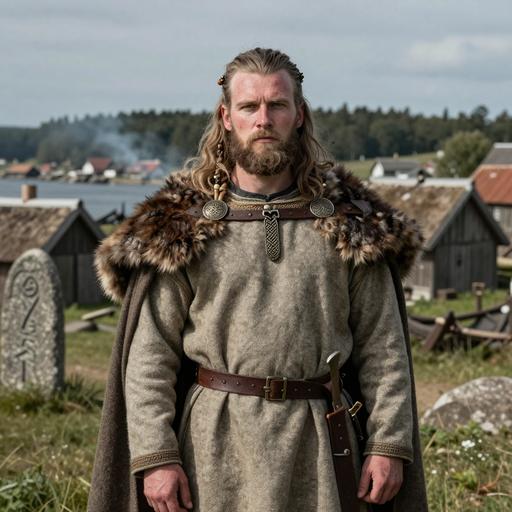
Avar Culture Post-Medieval Swedish Pre-Viking Swedish Slab Grave Culture Viking Viking Culture
Culture assignments are based on archaeological context of ancient DNA samples and may represent regional associations during specific time periods.
Chapter V

Sample Catalog

2 subclade carriers of haplogroup N1A1A1A1A1A2A (no exact N1A1A1A1A1A2A samples sequenced yet)

2 / 2 samples
Portrait Sample Country Era Date Culture Y-DNA Match
Portrait of ancient individual VK395 from Sweden, dated 900 CE - 1200 CE
VK395
Sweden Viking Age Sweden 900 CE - 1200 CE Viking N1a1a1a1a1a2a1a2 Downstream
Portrait of ancient individual VK461 from Sweden, dated 900 CE - 1050 CE
VK461
Sweden Viking Age Sweden 900 CE - 1050 CE Viking N1a1a1a1a1a2a1a Downstream
Chapter VI

Carrier Distribution Map

Geographic distribution of 2 ancient DNA samples (direct and subclade carriers of N1A1A1A1A1A2A)

Subclade carrier
Time Period Filter
All Time Periods
Showing all samples
Chapter VII

Temporal Distribution

Distribution of carriers across archaeological periods

Chapter VIII

Geographic Distribution

Distribution by country of origin (direct and subclade carriers shown by default)

Chapter IX

Country × Era Distribution

Cross-tabulation of carrier countries and archaeological periods (direct and subclade carriers shown by default)

Data

Data & Provenance

Source information and data quality

Last Updated 2026-06-17
Confidence Score 50/100
Coverage Low
Data Source

We use the latest phylotree for YDNA haplogroup classification and data.