Menu
Currency
Main
Store
Blog

Loading Report

Preparing your ancestry journey

Connecting to ancient matches...

Preparing your report

Skip to main content
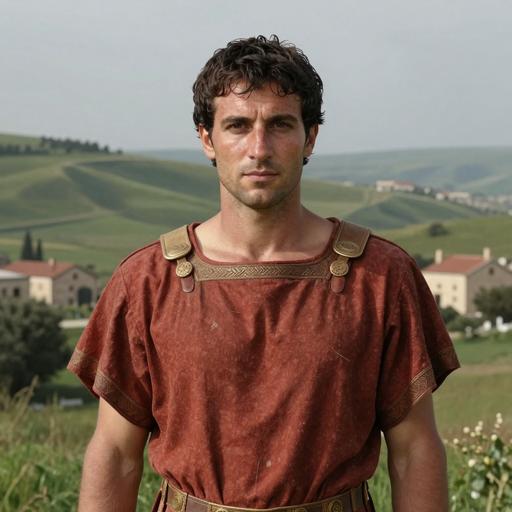
Portrait reconstruction of A man buried in Turkey in the Roman era
Ancient Individual

A man buried in Turkey in the Roman era

A man buried in Turkey during the Turkey Central Bogazkoy-Hattusa Roman Imperial

A fragment of the ancient world, preserved across millennia in strands of DNA.

BOG020
130 CE - 190 CE
Male
Turkey
Scroll to begin
Chapter I

Identity

The biological and cultural markers that define this ancient individual

Sample ID

BOG020

Date Range

130 CE - 190 CE

Cultural Period

Turkey Central Bogazkoy-Hattusa Roman Imperial

Biological Sex

Male

mtDNA Haplogroup

X2f

Y-DNA Haplogroup

J-PF5366

Chapter II

Place

Where this individual was discovered

Country Turkey
Locality Boğazköy-Ḫattuša (Çorum, Boğazkale)
Coordinates 40.0210, 34.6130
Chapter III

Time

When this individual lived in the broader context of human history

BOG020 130 CE - 190 CE
Chapter IV

Story

The narrative of this ancient life

The region of Boğazköy-Hattusa, located in present-day Turkey, holds a significant place in ancient history, primarily known as the heartland of the Hittite Empire. However, by the time of the Roman Imperial era, this area had transformed, becoming part of the vast Roman Empire. This transition represents a fascinating blend of cultures, showcasing changes in political structures, cultural practices, and architectural styles.

Historical Context

The Hittite Legacy:

Boğazköy, historically known as Hattusa, was the capital of the Hittite Empire, which thrived between the 17th and 11th centuries BCE. The Hittites were known for their advanced architecture, literacy, and legal systems. The remains of Hattusa, including city walls, temples, and royal residences, reflect the city's historical importance. Despite being a prominent power in the Bronze Age, the Hittites eventually fell to internal strife and external pressures, around 1200 BCE, resulting in regional fragmentation.

Romanization:

By the 1st century CE, the Roman Empire had expanded to include much of Anatolia, including the region around Boğazköy. The area, reorganized under Roman rule, saw significant shifts in governance, cultural practices, and socioeconomic structures. Roman influence introduced new languages, laws, and customs. Latin became the language of administration, while Roman law and urban planning models were implemented.

Cultural Influence

Architectural Evolution:

Under Roman rule, the region experienced an architectural transformation. Roman engineering and construction methods were integrated with local traditions. This period saw the introduction of Roman baths, theaters, and villas, which coexisted with existing Hittite structures. The blend of styles is evident in how local stone-cutting techniques were employed to meet Roman design ideals.

Religion and Society:

Roman polytheism initially integrated with local religious practices, leading to a syncretism of beliefs. Many indigenous deities were equated with Roman gods, a practice known as interpretatio Romana. Over time, the spread of Christianity significantly altered the religious landscape. By the 4th century CE, Christianity was increasingly practiced, leading to the establishment of early churches and Christian communities.

Language and Education:

While Latin was the official language of administration, Greek remained the lingua franca in much of Anatolia owing to earlier Hellenistic influences. The region saw a blend of Greek and Roman educational practices, with schools promoting classical literature, rhetoric, and philosophy.

Economy and Trade

The economic life of the Roman-occupied Boğazköy region was marked by integration into the wider imperial trade networks. The Roman Empire's expansive road system facilitated the movement of goods, people, and ideas, promoting trade in local agricultural products, metals, and crafted goods. Roman coinage helped standardize economic transactions, while local markets adapted to Roman commercial practices.

Social Structure

Roman social hierarchies were gradually established in the area. The local elite class often aligned with Roman authorities, gaining Roman citizenship and certain privileges. Meanwhile, indigenous populations experienced varying degrees of Romanization, influenced by trade, intermarriage, and military service.

Decline and Legacy

The decline of the Roman Imperial presence in Anatolia began in the 3rd century CE, exacerbated by internal and external pressures, including invasions and economic hardships. By the 5th century CE, as the Western Roman Empire waned, the Eastern Roman Empire, or Byzantine Empire, maintained control over the region, continuing the legacy of Roman traditions mingled with evolving Byzantine characteristics.

In conclusion, the Boğazköy-Hattusa region during the Roman Imperial era is emblematic of cultural transformation. It reflects the synthesis of Roman and local traditions, showcasing the complexities of imperial rule and cultural integration. Today, the archaeological remains stand as testimony to this dynamic period, offering insights into the confluence of Hittite heritage and Roman innovations.

Context

Related Samples

This individual exists within a broader network of ancient samples. No ancient genome stands alone.

Sample ID Culture/Period Date Location Action
BOG019 Turkey Central Bogazkoy-Hattusa Roman Imperial 100 CE Boğazköy-Ḫattuša (Çorum, Boğazkale), Turkey View
BOG020 Turkey Central Bogazkoy-Hattusa Roman Imperial 130 CE Boğazköy-Ḫattuša (Çorum, Boğazkale), Turkey View
BOG024 Turkey Central Bogazkoy-Hattusa Roman Imperial 130 CE Boğazköy-Ḫattuša (Çorum, Boğazkale), Turkey View
BOG028 Modern Turkish (Boğazköy-Hattuša) 1000-1900 CE 1000 CE Boğazköy-Ḫattuša (Çorum, Boğazkale), Turkey View
CTG025 Bronze Age Aegean Culture of Aydin 2015 BCE Çine-Tepecik (Aydın, Çine), Turkey View
G23 Early Bronze Age Theopetra Culture 2343 BCE Theopetra Cave (Thessaly), Greece View
G31 Early Helladic Perachora 2700 BCE Perachora Cave (Corinthia), Greece View
G37 Early Bronze Age Sarakenos Cave Culture 2476 BCE Boeotia, Sarakenos Cave (Thessalia-Central Greece, Stereas Elladas), Greece View
G62 Early Helladic Perachora 2700 BCE Perachora Cave (Corinthia), Greece View
G65 Early Helladic Perachora 2700 BCE Perachora Cave (Corinthia), Greece View
G66 Early Helladic Perachora 2700 BCE Perachora Cave (Corinthia), Greece View
G76a Early Helladic Perachora 2570 BCE Perachora Cave (Corinthia), Greece View
geo005 Didnauri Culture of Georgia 1260 BCE Didnauri (Samreklo), Georgia View
geo006 Didnauri Culture of Georgia 1043 BCE Didnauri (Samreklo), Georgia View
geo015 Kura-Araxes Culture 3017 BCE Doghlauri (Shida Kartli, Kareli), Georgia View
geo017 Doghlauri culture of Georgia 1375 BCE Doghlauri (Shida Kartli, Kareli), Georgia View
geo029 Didnauri Culture of Georgia 1222 BCE Didnauri (Samreklo), Georgia View
Gordion002 Central Anatolian Iron Age Culture (Gordion) 323 BCE Gordion (Central, Ankara), Turkey View
gur016 Nazarlebi Culture of Georgia 1500 BCE Nazarlebi (Eastern Georgia, Kakheti, Shiraki Plain), Georgia View
gur017 Nazarlebi Culture of Georgia 1500 BCE Nazarlebi (Eastern Georgia, Kakheti, Shiraki Plain), Georgia View
gur019 Nazarlebi Culture of Georgia 1500 BCE Nazarlebi (Eastern Georgia, Kakheti, Shiraki Plain), Georgia View
mus005 Central Anatolian Pre-Pottery Neolithic 7457 BCE Musular (Aksaray, Gülağaç), Turkey View
mus006 Central Anatolian Pre-Pottery Neolithic 7311 BCE Musular (Aksaray, Gülağaç), Turkey View
sha003 Bronze Age Shah Tepe 3200 BCE Shah Tepe (Kerman, Arzuiyeh), Iran View
sha004 Bronze Age Shah Tepe 3489 BCE Shah Tepe (Kerman, Arzuiyeh), Iran View
sha006 Bronze Age Shah Tepe 3200 BCE Shah Tepe (Kerman, Arzuiyeh), Iran View
sha007 Bronze Age Shah Tepe 3369 BCE Shah Tepe (Kerman, Arzuiyeh), Iran View
sha008 Bronze Age Shah Tepe 3200 BCE Shah Tepe (Kerman, Arzuiyeh), Iran View
sha009 Bronze Age Shah Tepe 3346 BCE Shah Tepe (Kerman, Arzuiyeh), Iran View
sha010 Bronze Age Shah Tepe 3200 BCE Shah Tepe (Kerman, Arzuiyeh), Iran View
sha012 Bronze Age Shah Tepe 3200 BCE Shah Tepe (Kerman, Arzuiyeh), Iran View
ksha014 Bronze Age Shah Tepe 3200 BCE Shah Tepe (Kerman, Arzuiyeh), Iran View
ulu117 Early Bronze Age Ulucak Culture 4000 BCE Ulucak Höyük (İzmir, Kemalpaşa), Turkey View
zrj003 Shamakhi Culture 205 CE Shamakhi, Azerbaijan View
Sample ID Culture/Period Date Location Action
BOG019 Turkey Central Bogazkoy-Hattusa Roman Imperial 100 CE Boğazköy-Ḫattuša (Çorum, Boğazkale), Turkey View
BOG020 Turkey Central Bogazkoy-Hattusa Roman Imperial 130 CE Boğazköy-Ḫattuša (Çorum, Boğazkale), Turkey View
BOG024 Turkey Central Bogazkoy-Hattusa Roman Imperial 130 CE Boğazköy-Ḫattuša (Çorum, Boğazkale), Turkey View
Sources

References

Scientific publications and genetic data that inform this profile.

Scientific Publication

Spatial and temporal heterogeneity in human mobility patterns in Holocene Southwest Asia and the East Mediterranean

Authors Koptekin D, Yüncü E, Rodríguez-Varela R, Altınışık NE, Psonis N et al.
Abstract

We present a spatiotemporal picture of human genetic diversity in Anatolia, Iran, Levant, South Caucasus, and the Aegean, a broad region that experienced the earliest Neolithic transition and the emergence of complex hierarchical societies. Combining 35 new ancient shotgun genomes with 382 ancient and 23 present-day published genomes, we found that genetic diversity within each region steadily increased through the Holocene. We further observed that the inferred sources of gene flow shifted in time. In the first half of the Holocene, Southwest Asian and the East Mediterranean populations homogenized among themselves. Starting with the Bronze Age, however, regional populations diverged from each other, most likely driven by gene flow from external sources, which we term "the expanding mobility model." Interestingly, this increase in inter-regional divergence can be captured by outgroup-f3-based genetic distances, but not by the commonly used FST statistic, due to the sensitivity of FST, but not outgroup-f3, to within-population diversity. Finally, we report a temporal trend of increasing male bias in admixture events through the Holocene.

Use code for 25% off Expires Jul 12