Menu
Currency
Main
Store
Blog

Loading Report

Preparing your ancestry journey

Connecting to ancient matches...

Preparing your report

Skip to main content
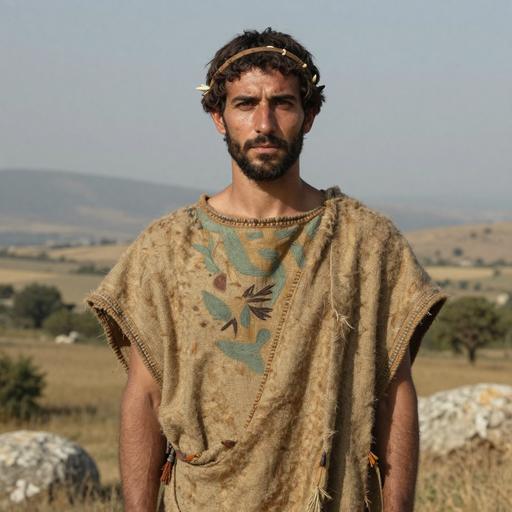
Portrait reconstruction of A man buried in Greece in the Bronze Age era
Ancient Individual

A man buried in Greece in the Bronze Age era

A man buried in Greece during the Early Bronze Age Theopetra Culture

A fragment of the ancient world, preserved across millennia in strands of DNA.

G23
2343 BCE - 2138 BCE
Male
Greece
Scroll to begin
Chapter I

Identity

The biological and cultural markers that define this ancient individual

Sample ID

G23

Date Range

2343 BCE - 2138 BCE

Cultural Period

Early Bronze Age Theopetra Culture

Biological Sex

Male

mtDNA Haplogroup

H5

Y-DNA Haplogroup

I-L701

Chapter II

Place

Where this individual was discovered

Country Greece
Locality Theopetra Cave (Thessaly)
Coordinates 39.6813, 21.6811
Chapter III

Time

When this individual lived in the broader context of human history

G23 2343 BCE - 2138 BCE
Chapter IV

Story

The narrative of this ancient life

The Early Bronze Age period in Greece, specifically within the context of the Helladic culture, is a fascinating era that reflects the beginnings of complex societal structures and technological advancements. Theopetra Cave, located in Thessaly, central Greece, provides an essential archaeological context to understand this period, even though the term \Theopetra Culture" is not widely recognized in archaeological classifications. The Helladic culture is usually divided into three main phases: Early, Middle, and Late, with the Early Helladic period spanning from approximately 3000 to 2000 BCE.

Geographic and Environmental Context

Theopetra Cave is situated in the Thessaly region, which is known for its fertile plains, rolling hills, and mountainous terrains. This region provided an ideal environment for early human settlers due to its rich natural resources, conducive agricultural conditions, and strategic location for trade and communication. The cave itself offers a unique window into prehistoric life, with evidence of continuous human occupation from the Paleolithic to the Neolithic and Bronze Age.

Socio-Political Structure

During the Early Bronze Age, communities in the Helladic region, including those around Theopetra, began forming more cohesive social structures, moving from tribal to more complex societal organization. Settlements grew in size and complexity, leading to the emergence of proto-urban centers that served as hubs for economic and cultural activities. This period saw the development of social hierarchies, likely governed by chieftains or proto-kings who exercised control over agricultural production, trade, and craftsmanship.

Economic Activity and Subsistence

The economy of Early Bronze Age Helladic culture was primarily agrarian, with people engaging in agriculture, animal husbandry, and fishing. The fertile plains of Thessaly facilitated the cultivation of crops such as wheat, barley, and legumes. Livestock, including sheep, goats, and cattle, were significant for meat, milk, wool, and labor. Theopetra Cave inhabitants engaged in hunting and gathering, supplemented by their agricultural activities.

Trade and exchange networks began to expand during this period, with evidence of interactions not only among Greek communities but also with neighboring regions. These networks facilitated the distribution of metals, such as bronze, which marked a significant technological advancement over the previous reliance on stone tools.

Technological and Artistic Developments

The Early Bronze Age is distinguished by advancements in metallurgy, notably the production and use of bronze—an alloy of copper and tin—which revolutionized tool and weapon making. Theopetra Cave, however, is more renowned for its earlier artifacts, but surrounding regions reflect the spread of this metallurgical knowledge. Pottery production flourished, characterized by the use of the potter’s wheel and the introduction of new shapes and styles, such as the sauceboat and other utilitarian and ceremonial forms.

Artistic expression, though not as opulent as in later periods, began to emerge more prominently in the form of simple decorative motifs on pottery, engraved seals, and possibly early forms of figurative art that may have had religious or cultural significance.

Religious and Cultural Practices

While definitive understanding of their religious beliefs remains elusive, early Helladic societies likely engaged in animistic or polytheistic worship, with possible reverence for natural deities associated with agriculture, fertility, and the elements. Ritualistic practices may have involved simple offerings, as indicated by the discovery of small artifacts and figurines, though detailed descriptions or depictions of religious rites from this period are limited.

Conclusion

The Early Bronze Age Helladic culture, illuminated through sites such as Theopetra Cave, represents a formative period characterized by significant socio-economic, technological, and cultural developments. This era laid the foundation for the more advanced civilizations that would emerge in the Middle and Late Bronze Age, eventually leading to the rise of the Mycenaean civilization. As such, the Early Bronze Age Theopetra and Helladic contexts provide a crucial understanding of the evolutionary trajectory of early Greek society and its lasting impact on European prehistory."

Context

Related Samples

This individual exists within a broader network of ancient samples. No ancient genome stands alone.

Sample ID Culture/Period Date Location Action
BOG019 Turkey Central Bogazkoy-Hattusa Roman Imperial 100 CE Boğazköy-Ḫattuša (Çorum, Boğazkale), Turkey View
BOG020 Turkey Central Bogazkoy-Hattusa Roman Imperial 130 CE Boğazköy-Ḫattuša (Çorum, Boğazkale), Turkey View
BOG024 Turkey Central Bogazkoy-Hattusa Roman Imperial 130 CE Boğazköy-Ḫattuša (Çorum, Boğazkale), Turkey View
BOG028 Modern Turkish (Boğazköy-Hattuša) 1000-1900 CE 1000 CE Boğazköy-Ḫattuša (Çorum, Boğazkale), Turkey View
CTG025 Bronze Age Aegean Culture of Aydin 2015 BCE Çine-Tepecik (Aydın, Çine), Turkey View
G23 Early Bronze Age Theopetra Culture 2343 BCE Theopetra Cave (Thessaly), Greece View
G31 Early Helladic Perachora 2700 BCE Perachora Cave (Corinthia), Greece View
G37 Early Bronze Age Sarakenos Cave Culture 2476 BCE Boeotia, Sarakenos Cave (Thessalia-Central Greece, Stereas Elladas), Greece View
G62 Early Helladic Perachora 2700 BCE Perachora Cave (Corinthia), Greece View
G65 Early Helladic Perachora 2700 BCE Perachora Cave (Corinthia), Greece View
G66 Early Helladic Perachora 2700 BCE Perachora Cave (Corinthia), Greece View
G76a Early Helladic Perachora 2570 BCE Perachora Cave (Corinthia), Greece View
geo005 Didnauri Culture of Georgia 1260 BCE Didnauri (Samreklo), Georgia View
geo006 Didnauri Culture of Georgia 1043 BCE Didnauri (Samreklo), Georgia View
geo015 Kura-Araxes Culture 3017 BCE Doghlauri (Shida Kartli, Kareli), Georgia View
geo017 Doghlauri culture of Georgia 1375 BCE Doghlauri (Shida Kartli, Kareli), Georgia View
geo029 Didnauri Culture of Georgia 1222 BCE Didnauri (Samreklo), Georgia View
Gordion002 Central Anatolian Iron Age Culture (Gordion) 323 BCE Gordion (Central, Ankara), Turkey View
gur016 Nazarlebi Culture of Georgia 1500 BCE Nazarlebi (Eastern Georgia, Kakheti, Shiraki Plain), Georgia View
gur017 Nazarlebi Culture of Georgia 1500 BCE Nazarlebi (Eastern Georgia, Kakheti, Shiraki Plain), Georgia View
gur019 Nazarlebi Culture of Georgia 1500 BCE Nazarlebi (Eastern Georgia, Kakheti, Shiraki Plain), Georgia View
mus005 Central Anatolian Pre-Pottery Neolithic 7457 BCE Musular (Aksaray, Gülağaç), Turkey View
mus006 Central Anatolian Pre-Pottery Neolithic 7311 BCE Musular (Aksaray, Gülağaç), Turkey View
sha003 Bronze Age Shah Tepe 3200 BCE Shah Tepe (Kerman, Arzuiyeh), Iran View
sha004 Bronze Age Shah Tepe 3489 BCE Shah Tepe (Kerman, Arzuiyeh), Iran View
sha006 Bronze Age Shah Tepe 3200 BCE Shah Tepe (Kerman, Arzuiyeh), Iran View
sha007 Bronze Age Shah Tepe 3369 BCE Shah Tepe (Kerman, Arzuiyeh), Iran View
sha008 Bronze Age Shah Tepe 3200 BCE Shah Tepe (Kerman, Arzuiyeh), Iran View
sha009 Bronze Age Shah Tepe 3346 BCE Shah Tepe (Kerman, Arzuiyeh), Iran View
sha010 Bronze Age Shah Tepe 3200 BCE Shah Tepe (Kerman, Arzuiyeh), Iran View
sha012 Bronze Age Shah Tepe 3200 BCE Shah Tepe (Kerman, Arzuiyeh), Iran View
ksha014 Bronze Age Shah Tepe 3200 BCE Shah Tepe (Kerman, Arzuiyeh), Iran View
ulu117 Early Bronze Age Ulucak Culture 4000 BCE Ulucak Höyük (İzmir, Kemalpaşa), Turkey View
zrj003 Shamakhi Culture 205 CE Shamakhi, Azerbaijan View
Sample ID Culture/Period Date Location Action
G23 Early Bronze Age Theopetra Culture 2343 BCE Theopetra Cave (Thessaly), Greece View
Sources

References

Scientific publications and genetic data that inform this profile.

Scientific Publication

Spatial and temporal heterogeneity in human mobility patterns in Holocene Southwest Asia and the East Mediterranean

Authors Koptekin D, Yüncü E, Rodríguez-Varela R, Altınışık NE, Psonis N et al.
Abstract

We present a spatiotemporal picture of human genetic diversity in Anatolia, Iran, Levant, South Caucasus, and the Aegean, a broad region that experienced the earliest Neolithic transition and the emergence of complex hierarchical societies. Combining 35 new ancient shotgun genomes with 382 ancient and 23 present-day published genomes, we found that genetic diversity within each region steadily increased through the Holocene. We further observed that the inferred sources of gene flow shifted in time. In the first half of the Holocene, Southwest Asian and the East Mediterranean populations homogenized among themselves. Starting with the Bronze Age, however, regional populations diverged from each other, most likely driven by gene flow from external sources, which we term "the expanding mobility model." Interestingly, this increase in inter-regional divergence can be captured by outgroup-f3-based genetic distances, but not by the commonly used FST statistic, due to the sensitivity of FST, but not outgroup-f3, to within-population diversity. Finally, we report a temporal trend of increasing male bias in admixture events through the Holocene.

Use code for 25% off Expires Jul 12