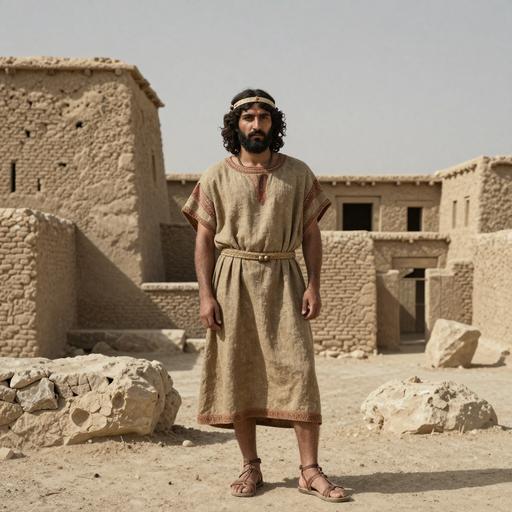
The Story
The journey of Y-DNA haplogroup J2A1A1A2B2A
Origins and Evolution
Y-DNA haplogroup J2A1A1A2B2A is a very specific downstream branch within J2a, itself one of the major paternal lineages that diversified in the Near East. Because it sits several layers beneath J2a, its time depth is likely relatively recent in genealogical terms, plausibly forming during the late Neolithic to Bronze Age, when populations in the Levant, Anatolia, Mesopotamia, and neighboring highland zones were experiencing increasing mobility, regional interaction, and social stratification.
This lineage should be understood as part of a broader Near Eastern male-line phylogeny that expanded through multiple episodes of demographic growth. Unlike widely expanded clades that became dominant through large-scale prehistoric dispersals, a rare terminal branch such as J2A1A1A2B2A likely reflects localized founder effects, clan continuity, and regional survival of small paternal lines. Its distribution is therefore expected to be patchy rather than uniform.
Subclades
As a subclade of J2a, J2A1A1A2B2A is nested within a lineage that includes many regionally important branches. At this level of resolution, available public phylogeographic data are usually sparse, so the best-supported interpretation is that this haplogroup represents a fine-scale descendant lineage connected to populations already known to carry J2a-associated diversity.
In practical terms, the main relevance of J2A1A1A2B2A is phylogenetic: it helps connect broader J2a diversity to individual family lines and localized population history. Its immediate parent clade likely contains a small number of related lineages distributed across the Levant, Anatolia, the Caucasus, northern Mesopotamia, and the Iranian plateau.
Geographical Distribution
The expected distribution of J2A1A1A2B2A is low-frequency and regionally scattered. It is most plausibly found in populations with long-term continuity in the Near East and surrounding areas, especially where historical gene flow has linked farming communities, urban networks, and highland pastoral groups.
Modern occurrences are most likely to be detected in:
- Levantine populations, where J2a diversity is often highest in the broader regional context
- Anatolian populations, reflecting deep continuity and repeated prehistoric and historic mobility
- Caucasus populations, which often preserve old West Asian paternal lineages at low to moderate frequencies
- Mesopotamian populations, including communities with strong ancient Near Eastern ancestry
- Iranian plateau populations, where multiple branches of J2 lineages occur in regional substructure
- Arabian Peninsula populations, especially in groups with historical connections to northern Near Eastern ancestry
- Jewish populations, where many J2 subclades appear at appreciable frequencies due to historical founder effects and diaspora history
- Southeastern European populations, where Near Eastern lineages entered through Neolithic expansions and later historical contacts
Historical and Cultural Significance
J2 lineages are often discussed in relation to the spread of agriculture, early village societies, urbanization, and later Bronze Age interaction spheres across Western Asia and the Mediterranean. J2A1A1A2B2A itself cannot be linked with certainty to a single archaeological culture, but it is consistent with paternal continuity in societies shaped by the Pre-Pottery Neolithic, Ceramic Neolithic, Chalcolithic, and Bronze Age transitions.
The broader J2a background is frequently associated with ancient populations involved in the diffusion of farming and mixed agro-pastoral economies. For a rare branch like J2A1A1A2B2A, the most defensible interpretation is not a direct assignment to one culture, but rather a role within the regional demographic layering that characterized the ancient Near East. Later movements during the Classical, Roman, Byzantine, Islamic, and medieval periods may have further redistributed this lineage across connected populations.
Region Distribution Notes
This haplogroup is expected to show highest relevance in Western Asia and lower, more sporadic presence in nearby Mediterranean and European regions. Its frequency is likely low overall, with possible pockets of higher representation in endogamous or historically continuous populations.
Conclusion
Y-DNA haplogroup J2A1A1A2B2A is a rare and informative Near Eastern paternal lineage within the broader J2a network. Its distribution likely reflects localized survival, founder effects, and repeated regional dispersal across the Levant, Anatolia, the Caucasus, Mesopotamia, Iran, and adjacent areas, making it valuable for fine-scale studies of population history and paternal ancestry.
Key Points
- Origins and Evolution
- Subclades
- Geographical Distribution
- Historical and Cultural Significance
- Region Distribution Notes