Menu
Currency
Y-DNA Haplogroup • Paternal Lineage

N1A1A1A1A1A1A1B

Y-DNA Haplogroup N1A1A1A1A1A1A1B

~1,000 years ago
North Eurasia
0 subclades
1 ancient samples
Scroll to explore
Chapter I

The Story

The journey of Y-DNA haplogroup N1A1A1A1A1A1A1B

Origins and Evolution

Y-DNA haplogroup N1A1A1A1A1A1A1B is a deeply nested branch of haplogroup N, one of the major paternal lineages associated with northern Eurasia. Because it sits several steps downstream from the parent clade N1A1A1A1A1A1A1, it is expected to be very rare, recent in coalescent time, and shaped by strong founder effects rather than broad prehistoric dispersal.

The most plausible origin for this lineage is North Eurasia, especially the forest and forest-tundra zones stretching across the circum-Baltic region and into western Siberia. In population-genetic terms, such a lineage would likely have emerged within a small local male lineage cluster, where endogamy, demographic bottlenecks, and repeated regional isolation amplified its frequency in a limited set of communities.

Subclades

As a highly derived terminal or near-terminal branch, N1A1A1A1A1A1A1B currently has limited publicly documented substructure. In practical phylogenetic terms, it is best understood as a child lineage of N1A1A1A1A1A1A1 that may itself contain one or more rare private branches identified by high-resolution sequencing.

Its significance is therefore less about large-scale prehistoric migrations and more about fine-grained population history, local descent, and the reconstruction of recent paternal networks in northern Eurasia.

Geographical Distribution

This haplogroup is expected to occur at low frequency in populations with strong Uralic, Baltic-Finnic, Sámi, and northern East European ancestry, especially where long-term continuity in the boreal zone is documented. The lineages most likely to carry this haplogroup are found in:

  • Finnish and Baltic-Finnic populations
  • Sámi groups of northern Fennoscandia
  • Estonians, Latvians, and Lithuanians at low frequency
  • Uralic-speaking populations such as the Khanty, Mansi, Nenets, and Komi
  • Western Siberian and broader northern Siberian populations
  • Some northern East European populations with Uralic-admixed ancestry

Because this is a rare lineage, observed distribution likely depends heavily on sampling depth and high-resolution SNP testing. Its presence in modern populations should be interpreted as evidence of localized paternal continuity rather than a marker of a single ethnolinguistic identity.

Historical and Cultural Significance

Lineages within haplogroup N are often associated with the spread and persistence of Uralic-speaking and forest-zone populations across northern Eurasia. For a rare derived branch like N1A1A1A1A1A1A1B, the cultural relevance is best understood through its possible association with circum-Baltic fishing-hunting communities, Sámi ethnogenesis, and western Siberian indigenous groups.

The lineage may also reflect the demographic effects of the Corded Ware horizon and later regional interactions in northeastern Europe, though this specific subclade is more likely to represent later local diversification than a direct signature of early Bronze Age expansion. In other words, it is a useful marker for microhistory: clan formation, regional isolation, and the survival of small paternal lines through time.

Relationship to Other Haplogroups

Haplogroup N has several major branches with broad northern Eurasian relevance, including lineages common in Finno-Ugric and Siberian populations. While N1A1A1A1A1A1A1B is too rare to be linked to a single well-known ancient culture with confidence, it likely falls within the broader paternal landscape alongside other northern lineages that co-occur in the same regions, including N1c derivatives and, in mixed populations, occasional I1 and R1a lines.

The best comparative context is not a broad sister-clade signal but rather the shared geographic overlap of northern paternal lineages shaped by postglacial recolonization, mobility along river corridors, and repeated founder events in the boreal zone.

Conclusion

N1A1A1A1A1A1A1B is a rare and highly derived Y-DNA lineage that most likely arose in North Eurasia within the last few thousand years. Its distribution points to localized paternal continuity among northern forest-zone populations, especially those with Uralic and circum-Baltic ancestry, making it an informative marker for studying fine-scale demographic history rather than broad prehistoric migrations.

Key Points

  • Origins and Evolution
  • Subclades
  • Geographical Distribution
  • Historical and Cultural Significance
  • Relationship to Other Haplogroups
Chapter II

Tree & Relationships

Phylogenetic context and subclades

Evolution Path

This haplogroup's evolutionary journey from its earliest ancestor to the present.

Steps Haplogroup Age Estimate Archaeology Era Time Passed Immediate Descendants Tested Modern Descendants Ancient Connections
1 N1A1A1A1A1A1A1B Current ~1,000 years ago 🏰 Medieval 1,200 years 0 0 1
2 N1A1A1A1A1A1A1 ~2,000 years ago 🏰 Medieval 1,500 years 2 0 0
3 N1A1A1A1A1A1A ~2,000 years ago 🏰 Medieval 1,500 years 3 0 10
4 N1A1A1A1A1A1 ~2,000 years ago 🏰 Medieval 1,500 years 1 0 0
5 N1A1A1A1A1A ~2,000 years ago 🏰 Medieval 1,500 years 2 7 3
6 N1A1A1A1A1 ~2,000 years ago 🏺 Classical Antiquity 2,500 years 1 8 0
7 N1A1A1A1A ~4,000 years ago 🔶 Bronze Age 3,500 years 4 24 3
8 N1A1A1A1 ~4,000 years ago 🔶 Bronze Age 4,500 years 1 29 0
9 N1A1A1A ~8,000 years ago 🌾 Neolithic 8,000 years 1 29 0
10 N1A1A1 ~12,000 years ago 🌾 Neolithic 12,000 years 1 29 0
11 N1A1A ~20,000 years ago 🏹 Mesolithic 20,000 years 2 29 1
12 N1A1 ~20,000 years ago 🏹 Mesolithic 20,000 years 1 29 0
13 N1A ~20,000 years ago 🏹 Mesolithic 20,000 years 2 41 0
14 N1 ~25,000 years ago 🦴 Paleolithic 25,000 years 2 56 14
15 N ~45,000 years ago 🦴 Paleolithic 45,000 years 2 147 17
16 NO ~45,000 years ago 🦴 Paleolithic 45,000 years 4 770 12

Subclades (0)

Terminal branch - no known subclades

Siblings (1)

Other branches from the same parent haplogroup

Chapter III

Where in the World

Geographic distribution and modern presence

Place of Origin

North Eurasia

Modern Distribution

The populations where Y-DNA haplogroup N1A1A1A1A1A1A1B is found include:

  1. Finnish and other Baltic-Finnic populations
  2. Sámi populations of northern Fennoscandia
  3. Estonian, Latvian, and Lithuanian populations
  4. Uralic-speaking populations such as the Khanty, Mansi, Nenets, and Komi
  5. Western Siberian and broader northern Siberian populations
  6. Some East European populations with northern ancestry components
  7. Ancient and modern populations of the circum-Baltic and Ural forest zones

Regional Presence

Northern Europe (Fennoscandia) High
Baltic coast (Estonia/Latvia) Low
Northern Russia / Komi region Low
Northern Eurasia (occasional) Low
Central Asia Low
CHAPTER IV

When in Time

Your haplogroup in the context of human history

~10k years ago

Neolithic Revolution

Agriculture begins, settled communities form

~5k years ago

Bronze Age

Metalworking, writing, and early civilizations

~3k years ago

Iron Age

Iron tools, expanded trade networks

~2k years ago

Classical Antiquity

Greek and Roman civilizations flourish

~1k years ago

Haplogroup N1A1A1A1A1A1A1B

Your Y-DNA haplogroup emerged in North Eurasia

North Eurasia
Present

Present Day

Modern era

Your Haplogroup
Historical Era
Chapter IV-B

Linked Cultures

Ancient cultures associated with Y-DNA haplogroup N1A1A1A1A1A1A1B

Cultural Heritage

These ancient cultures have been linked to haplogroup N1A1A1A1A1A1A1B based on matching ancient DNA samples from archaeological excavations. The presence of this haplogroup in these cultures provides insights into the migrations and population movements of populations carrying this haplogroup.

Płońsk Culture Post-Medieval Swedish Viking Viking Culture
Culture assignments are based on archaeological context of ancient DNA samples and may represent regional associations during specific time periods.
Chapter V

Sample Catalog

1 direct carrier of haplogroup N1A1A1A1A1A1A1B

1 / 1 samples
Portrait Sample Country Era Date Culture Y-DNA Match
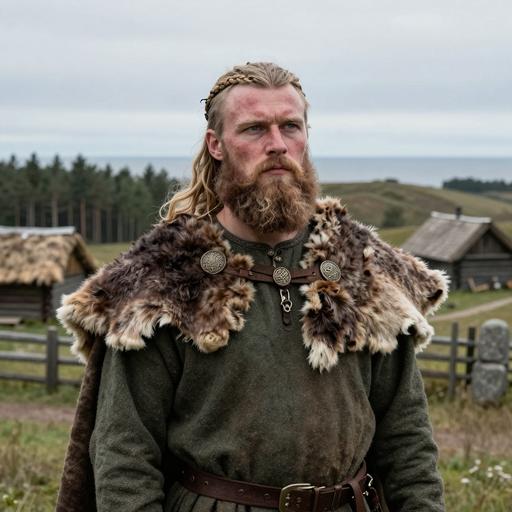
Portrait of ancient individual VK550 from Estonia, dated 700 CE - 800 CE
VK550
Estonia Early Viking Age Estonia 700 CE - 800 CE Viking N1a1a1a1a1a1a1b Direct
Chapter VI

Carrier Distribution Map

Geographic distribution of 1 ancient DNA sample (direct and subclade carriers of N1A1A1A1A1A1A1B)

Direct carrier
Time Period Filter
All Time Periods
Showing all samples
Chapter VII

Temporal Distribution

Distribution of carriers across archaeological periods

Chapter VIII

Geographic Distribution

Distribution by country of origin (direct and subclade carriers shown by default)

Chapter IX

Country × Era Distribution

Cross-tabulation of carrier countries and archaeological periods (direct and subclade carriers shown by default)

Data

Data & Provenance

Source information and data quality

Last Updated 2026-06-17
Confidence Score 50/100
Coverage Low
Data Source

We use the latest phylotree for YDNA haplogroup classification and data.