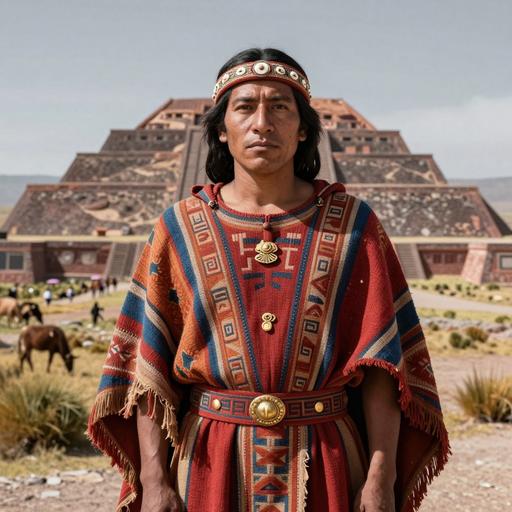
The Story
The journey of Y-DNA haplogroup Q1B1A1A1W
Origins and Evolution
Y-DNA haplogroup Q1B1A1A1W is a downstream subclade of Q1B1A1A1, placing it within the broader haplogroup Q radiation that is strongly associated with northern Eurasian paternal lineages. Based on its position in the phylogeny, this lineage most likely emerged in North Eurasia during the late Pleistocene to early Holocene, roughly 12 thousand years ago, after the diversification of ancestral Q branches among populations adapted to northern environments.
As with many rare Y-chromosome branches, the present-day distribution of Q1B1A1A1W is likely the result of founder effects, genetic drift, and repeated population bottlenecks rather than broad demographic dominance. Its ancestry is best interpreted in the context of ancient Siberian and Inner Asian hunter-gatherer populations that later contributed paternal lineages to both Central Asian and Native American genetic histories.
Subclades
Because Q1B1A1A1W is a highly downstream branch, it is expected to have very limited internal diversity or only a small number of currently defined descendant lineages. In many such cases, substructure is still being refined as more Y-chromosome sequencing data becomes available. Its closest phylogenetic context is therefore defined more by its placement within Q1B1A1A1 than by a large, well-characterized internal branching system.
Geographical Distribution
This haplogroup is expected to be rare and geographically dispersed. It is most plausibly encountered in:
- Siberian indigenous groups, where deep northern Eurasian paternal lineages are most likely to persist
- Central Asian populations, reflecting historical movement across the steppe and forest-steppe zones
- Indigenous peoples of the Americas, through ancestry ultimately derived from Northeast Asian source populations
- Northern European populations, usually at low frequency and often as a result of later migratory or founder events
- West Eurasian and Middle Eastern populations, where it may appear sporadically due to historical admixture and long-distance mobility
Historical and Cultural Significance
The broader haplogroup Q is one of the major paternal lineages linked to the peopling of North Asia and the Americas. While Q1B1A1A1W itself is rare and likely not tied to a single well-known archaeological culture, its ancestry fits into the demographic processes that shaped post-glacial Siberian populations, Holocene steppe networks, and the paternal lineages carried into the Americas.
In archaeological terms, this lineage may be indirectly associated with late hunter-gatherer and early pastoralist contexts in northern Eurasia, though direct attribution to a specific material culture is often not possible without ancient DNA evidence from securely dated remains. Its significance lies in illuminating the fine-scale branching of paternal diversity among populations that were historically small, mobile, and geographically expansive.
Population Genetics Context
Rare subclades such as Q1B1A1A1W are important because they help reconstruct micro-histories of migration and isolation. Their distribution can reflect:
- survival in isolated refugia
- founder effects during population expansions
- limited gene flow between neighboring groups
- long-range dispersal across northern Eurasia and into the Americas
Because the lineage is downstream of a North Eurasian ancestral node, its deepest history is likely connected to the broader population structure that produced other northern Q branches, including lineages found in Siberia and Native American populations.
Conclusion
Y-DNA haplogroup Q1B1A1A1W is a rare and informative paternal lineage within the northern Eurasian Q phylogeny. Although not widely distributed, it provides evidence for the deep regional history of hunter-gatherer-derived populations in North Eurasia and their later dispersals into Siberia, Central Asia, the Americas, and sporadically West Eurasia.
Key Points
- Origins and Evolution
- Subclades
- Geographical Distribution
- Historical and Cultural Significance
- Population Genetics Context