Menu
mtDNA Haplogroup • Maternal Lineage

F1C1

mtDNA Haplogroup F1C1

~10,000 years ago
East to Southeast Asia
1 subclades
Scroll to explore
Chapter I

The Story

The journey of mtDNA haplogroup F1C1

Origins and Evolution

Haplogroup F1C1 is a downstream lineage within the broader mtDNA haplogroup F1C, itself a branch of macro-haplogroup F which is widely distributed in East and Southeast Asia. Based on the phylogenetic position of F1C1 within F1C and coalescence estimates for nearby F1 subclades, F1C1 most likely arose in the early Holocene (roughly around 10 kya), in a geographic zone spanning southern China into mainland Southeast Asia. Its emergence fits the pattern of post-glacial diversification and regional differentiation of maternal lineages associated with expanding Holocene populations and the spread of local Neolithic economies.

Subclades (if applicable)

F1C1 is an intermediate/derived branch beneath F1C; specific named downstream subclades of F1C1 have been reported at low frequencies in population surveys but vary between studies due to differing sample sizes and resolution. Where high-resolution mitogenome sequencing is available, F1C1 can be separated into further sublineages that show localized distributions (for example, island versus mainland variants). Detailed subclade structure is best interpreted from full mitochondrial genomes and continually refined as more ancient and modern mitogenomes are added.

Geographical Distribution

F1C1 is found at low-to-moderate frequencies across a broad East-to-Southeast Asian range. It is most commonly detected in southern and eastern China and present among many mainland Southeast Asian groups (Vietnamese, Thai, Lao), as well as among Austronesian-speaking populations in the Philippines, Indonesia, and parts of Malaysia. Small but detectable occurrences have been recorded in Japan (including Ryukyu/Okinawa), Korea, some southern Chinese minority groups (e.g., Zhuang, Yao), scattered Central Asian and southern Siberian samples, and very rarely along some South Asian coastal populations. The distribution pattern indicates both long-term regional continuity and some later dispersal associated with island colonization and Austronesian movements.

Historical and Cultural Significance

While F1C1 itself is not a marker of any single archaeological culture, its distribution is consistent with several important demographic processes in East and Southeast Asia during the Holocene. These include: continued survival of Paleolithic maternal lineages through local Holocene population growth, participation in Neolithic expansions of rice-farming and other food-producing economies in southern China and mainland Southeast Asia, and incorporation into Austronesian-associated founder series during island colonization. In ancient DNA studies, lineages related to F1C and its subclades occasionally appear in Neolithic and later contexts in southern China and island Southeast Asia, supporting a narrative of continuity plus Holocene movement rather than a single wholesale replacement event.

Conclusion

F1C1 is a regionally informative maternal lineage characteristic of East and Southeast Asia, particularly southern China and neighboring areas. Its early Holocene origin and modern-day presence across both mainland and island populations make it useful for tracing local demographic histories, the spread of Neolithic lifeways in southern East Asia, and the maternal component of Austronesian expansions. Ongoing mitogenome sequencing and increased sampling across underrepresented regions will refine the subclade structure and improve demographic inferences for F1C1.

Key Points

  • Origins and Evolution
  • Subclades (if applicable)
  • Geographical Distribution
  • Historical and Cultural Significance
  • Conclusion
Chapter II

Tree & Relationships

Phylogenetic context and subclades

Evolution Path

This haplogroup's evolutionary journey from its earliest ancestor to the present.

Steps Haplogroup Age Estimate Archaeology Era Time Passed Immediate Descendants Tested Modern Descendants Ancient Connections
1 F1C1 Current ~10,000 years ago 🌾 Neolithic 10,000 years 1 4 0
2 F1C ~12,000 years ago 🌾 Neolithic 12,000 years 1 6 0
3 F1 ~25,000 years ago 🦴 Paleolithic 25,000 years 7 115 10
4 N ~60,000 years ago 🦴 Paleolithic 60,000 years 15 15,452 13
5 L3 ~70,000 years ago 🦴 Paleolithic 70,000 years 11 17,621 6
6 L ~160,000 years ago 🦴 Paleolithic 160,000 years 7 18,987 5
Chapter III

Where in the World

Geographic distribution and modern presence

Place of Origin

East to Southeast Asia

Modern Distribution

The populations where mtDNA haplogroup F1C1 is found include:

  1. Han Chinese (northern and southern groups)
  2. Japanese (including some Ryukyu/Okinawan individuals)
  3. Koreans (low frequency)
  4. Vietnamese and other mainland Southeast Asian groups (Thai, Lao)
  5. Filipinos and other Austronesian-speaking populations in Island Southeast Asia
  6. Indonesians and Malays (various islands)
  7. Some Near Oceanian/Austronesian-derived groups (parts of Melanesia/Micronesia, low frequency)
  8. Southern Chinese minority groups (e.g., Zhuang, Yao) and other Sino-Tibetan fringe populations
  9. Scattered occurrences in Central Asian and southern Siberian samples (rare)
  10. Occasional reports from South Asian coastal groups (very rare)
CHAPTER IV

When in Time

Your haplogroup in the context of human history

~10k years ago

Neolithic Revolution

Agriculture begins, settled communities form

~10k years ago

Haplogroup F1C1

Your mtDNA haplogroup emerged in East to Southeast Asia

East to Southeast Asia
~5k years ago

Bronze Age

Metalworking, writing, and early civilizations

~3k years ago

Iron Age

Iron tools, expanded trade networks

~2k years ago

Classical Antiquity

Greek and Roman civilizations flourish

Present

Present Day

Modern era

Your Haplogroup
Historical Era
Chapter IV-B

Linked Cultures

Ancient cultures associated with mtDNA haplogroup F1C1

Cultural Heritage

These ancient cultures have been linked to haplogroup F1C1 based on matching ancient DNA samples from archaeological excavations. The presence of this haplogroup in these cultures provides insights into the migrations and population movements of populations carrying this haplogroup.

Early Medieval Mongolian Kalatasi Culture Kurma Culture Late Medieval Mongolian Samdzong Culture Upper Yellow River Culture Ust-Belaya Culture Vietnamese Neolithic Yellow River Culture
Culture assignments are based on archaeological context of ancient DNA samples and may represent regional associations during specific time periods.
Chapter V

Sample Catalog

12 subclade carriers of haplogroup F1C1 (no exact F1C1 samples sequenced yet)

12 / 12 samples
Portrait Sample Country Era Date Culture mtDNA Match
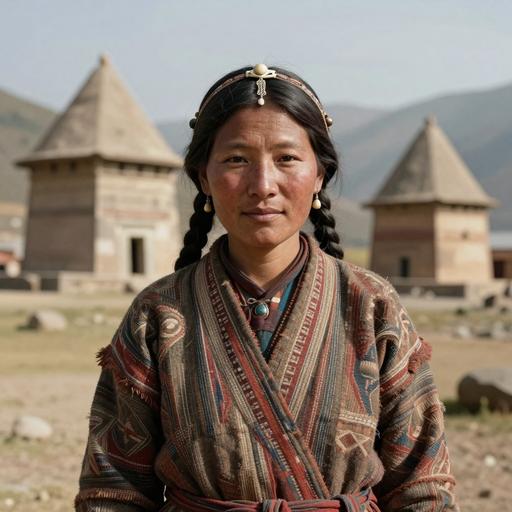
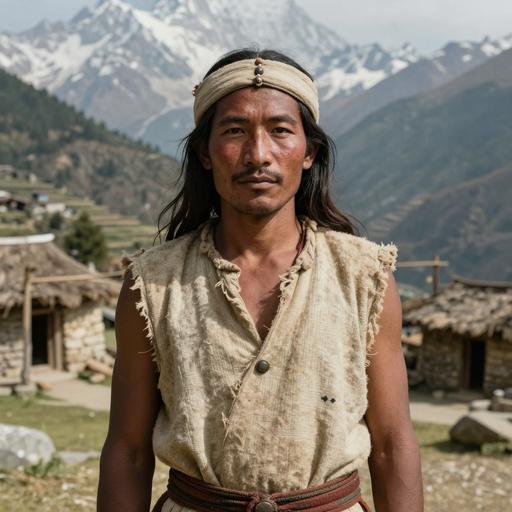
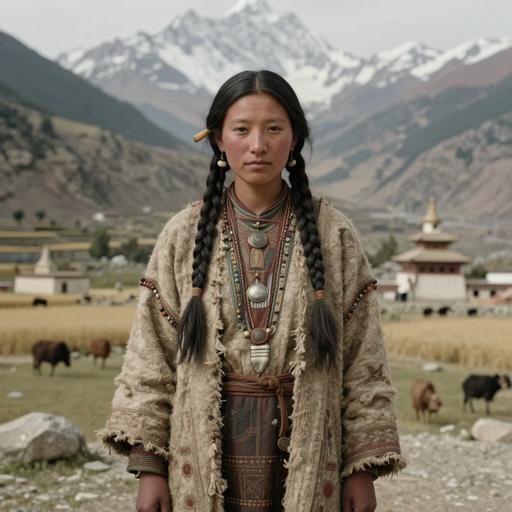
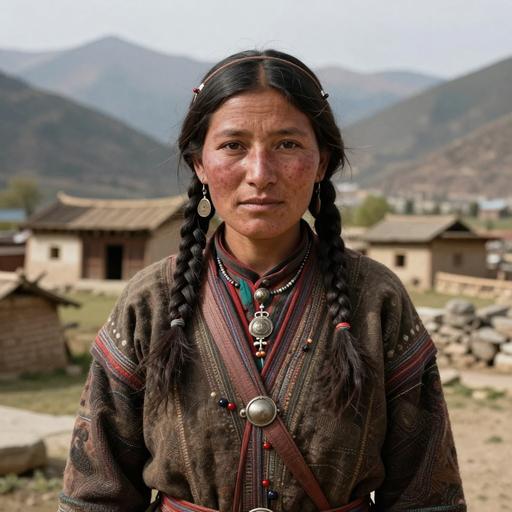
Portrait of ancient individual S40 from Nepal, dated 200 CE - 700 CE
S40
Nepal Samdzong 1500BP 200 CE - 700 CE Samdzong Culture F1c1a1a Downstream
Portrait of ancient individual S40 from Nepal, dated 200 CE - 700 CE
S40
Nepal Iron Age Tibet 200 CE - 700 CE F1c1a1a Downstream
Portrait of ancient individual S36 from Nepal, dated 350 CE - 1000 CE
S36
Nepal Mustang Samdzong Middle Kingdoms 350 CE - 1000 CE Samdzong Culture F1c1a1 Downstream
Portrait of ancient individual C1705 from China, dated 368 BCE - 173 BCE
C1705
China Iron Age Kalatasi, Xinjiang, China 368 BCE - 173 BCE Kalatasi Culture F1c1a1 Downstream
Portrait of ancient individual TUM001 from Mongolia, dated 500 CE - 900 CE
TUM001
Mongolia Early Medieval Bulgan, Mongolia 500 CE - 900 CE Early Medieval Mongolian F1c1a1 Downstream
Portrait of ancient individual C5189 from China, dated 660 CE - 774 CE
C5189
China Tibetan Plateau Dama (644 CE) 660 CE - 774 CE Dama Culture F1c1a1a Downstream
Portrait of ancient individual KM4 from Nepal, dated 800 BCE - 1 BCE
KM4
Nepal Late Iron Age Nepal 800 BCE - 1 BCE Late Iron Age Culture F1c1a1a Downstream
Portrait of ancient individual KS8 from Nepal, dated 800 BCE - 1 BCE
KS8
Nepal Late Iron Age Nepal 800 BCE - 1 BCE Late Iron Age Culture F1c1a1a Downstream
Portrait of ancient individual M295 from Nepal, dated 800 BCE - 150 CE
M295
Nepal Late Iron Age to Early Middle Kingdoms Mebrak, Mustang, Nepal 800 BCE - 150 CE Mebrak Culture F1c1a1a Downstream
Portrait of ancient individual M4580 from Nepal, dated 800 BCE - 150 CE
M4580
Nepal Late Iron Age to Early Middle Kingdoms Mebrak, Mustang, Nepal 800 BCE - 150 CE Mebrak Culture F1c1a1a Downstream
Chapter VI

Carrier Distribution Map

Geographic distribution of 12 ancient DNA samples (direct and subclade carriers of F1C1)

Subclade carrier
Time Period Filter
All Time Periods
Showing all samples
Chapter VII

Temporal Distribution

Distribution of carriers across archaeological periods

Chapter VIII

Geographic Distribution

Distribution by country of origin (direct and subclade carriers shown by default)

Chapter IX

Country × Era Distribution

Cross-tabulation of carrier countries and archaeological periods (direct and subclade carriers shown by default)

Data

Data & Provenance

Source information and data quality

Last Updated 2026-02-16
Confidence Score 50/100
Coverage Low
Data Source

We use the latest phylotree for MTDNA haplogroup classification and data.